


Quick Answer
The primary difference between a 6-axis IMU and a 9-axis IMU is the number of motion-sensing components they contain and the completeness of the orientation estimation they provide. A 6-axis IMU integrates a 3-axis accelerometer and a 3-axis gyroscope, whereas a 9-axis IMU incorporates an additional 3-axis magnetometer for absolute heading (yaw) estimation.
According to Titterton and Weston (Strapdown Inertial Navigation Technology, 2004) and Farrell (Aided Navigation: GPS with High-Rate Sensors, 2008), gyroscope drift is a fundamental limitation of inertial-only systems, and magnetometer fusion is commonly used to correct long-term yaw error. Modern sensor fusion approaches, such as Kalman filtering and complementary filtering, further enhance the stability and accuracy of nine-axis IMUs in robotics, drones, and navigation systems.
Introduction: Why IMU Axis Count Matters?
Inertial measurement units (IMUs) are fundamental components of modern motion tracking systems used in robotics, drones, smartphones, automotive systems, wearable devices, and industrial automation. The term ‘axis’ refers to the number of independent measurement dimensions that a sensor provides. As systems become more autonomous, the demand for accurate, real-time orientation and motion tracking increases significantly.
In simple terms, a 6-axis IMU provides motion tracking without absolute heading, while a 9-axis IMU provides motion tracking with absolute orientation reference (heading correction). This distinction may seem straightforward, but in real-world engineering systems, it affects drift behaviour, sensor fusion complexity, calibration requirements, and even product cost structure.
What is a 6 Axis IMU?
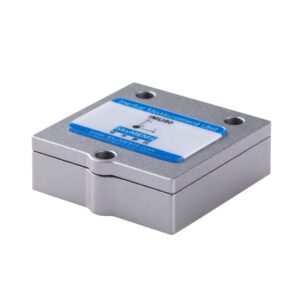
A 6-axis IMU consists of:
- 3-axis accelerometer (X, Y, Z linear acceleration)
- 3-axis gyroscope (X, Y, Z angular velocity)
It provides:
- Acceleration data
- Angular velocity data
- Relative orientation estimation
However, it does not include a magnetometer, meaning it cannot directly measure Earth’s magnetic field for absolute heading reference.
Core Working Principle
A 6-axis IMU estimates orientation by integrating gyroscope data over time. However, gyroscopes suffer from bias drift, which accumulates error over time. Accelerometers are used to correct pitch and roll using gravity as a reference, but yaw remains unstable.
This leads to a critical limitation:
A 6-axis IMU can stabilize tilt (pitch/roll), but cannot reliably stabilize yaw over long durations.
Strengths of 6 Axis IMU
Lower cost
Lower power consumption
Simpler sensor fusion algorithms
Smaller physical footprint
Faster sampling rates in embedded systems
Weaknesses of 6 Axis IMU
No absolute heading reference
Yaw drift over time
Poor long-term orientation stability
Limited performance in navigation-grade applications
What is a 9 Axis IMU?
A 9-axis IMU includes:
- 3-axis accelerometer
- 3-axis gyroscope
- 3-axis magnetometer
It provides full 3D motion sensing with an additional absolute reference to Earth’s magnetic field.
Core Functionality
The magnetometer acts as a digital compass. When fused with accelerometer and gyroscope data, it enables:
- Stable roll, pitch, and yaw
- Reduced long-term drift
- Absolute heading estimation
This makes 9-axis IMUs widely used in navigation systems, drones, AR/VR, and robotics.
Sensor Fusion Role
A 9-axis IMU typically relies on:
- Kalman Filter (KF)
- Extended Kalman Filter (EKF)
- Madgwick or Mahony filter
These algorithms combine all three sensors to produce a stable orientation output.
Strengths of 9 Axis IMU
Absolute orientation estimation
Reduced yaw drift
Better long-term stability
Suitable for navigation systems
Weaknesses of 9 Axis IMU
Magnetometer interference sensitivity
Higher cost
More complex calibration
Susceptible to hard/soft iron distortion
6 Axis IMU vs 9 Axis IMU: Core Differences
Structural Comparison
| Merkmal | 6 Axis IMU | 9 Axis IMU |
| Beschleunigungsmesser | Ja | Ja |
| Gyroskop | Ja | Ja |
| Magnetometer | Nein | Ja |
| Degrees of Freedom | 6 | 9 |
| Heading Reference | Relative only | Absolute (Earth-based) |
| Drift Behavior | High yaw drift | Low yaw drift |
| Complexity | Niedrig | Medium–High |
Orientation Accuracy Difference
A 6-axis IMU cannot correct yaw drift because it lacks an external reference. A 9-axis IMU uses magnetometer data to continuously recalibrate heading.
In robotics navigation:
- 6-axis = short-term motion tracking
- 9-axis = long-term navigation stability
Sensor Fusion Complexity
| Aspect | 6 Axis IMU | 9 Axis IMU |
| Fusion Inputs | 2 sensors | 3 sensors |
| Algorithm Complexity | Niedrig | Higher |
| Calibration Needs | Mäßig | Hoch |
| Computational Load | Niedrig | Mittel |
How Sensor Fusion Works in IMUs?
Sensor fusion is the mathematical process of combining raw sensor data into a stable orientation output.
Key Challenge: Gyroscope Drift
According to Farrell (2008), gyroscopes accumulate bias over time:
Small angular error → large long-term drift
Especially severe in the yaw axis
Role of Accelerometer (6-axis IMU)
Detects gravity vector
Stabilizes pitch and roll
Cannot resolve yaw
Role of Magnetometer (9-axis IMU)
Measures Earth’s magnetic field
Provides absolute heading reference
Corrects yaw drift
Sensor Contribution to Orientation
| Sensor | Stellplatz | Roll | Yaw | Drift-Korrektur |
| Beschleunigungsmesser | Ja | Ja | Nein | Low-frequency stabilization |
| Gyroskop | Ja | Ja | Ja | Short-term accuracy |
| Magnetometer | Nein | Nein | Ja | Long-term yaw correction |
Real-World Applications
Inertial Measurement Units (IMUs) are widely used in modern motion-sensing and navigation systems. The difference between a 6-axis IMU and a 9-axis IMU mainly determines the level of motion accuracy, environmental robustness, and application complexity.
Applications of 6-Axis IMU
A 6-axis IMU typically includes:
- 3-axis accelerometer
- 3-axis gyroscope
It provides reliable motion tracking but without magnetic field correction, making it suitable for short-term or relative motion sensing.
Key applications:
- Smartphone motion detection
- Screen rotation
- Step counting
- Basic gesture sensing
- Spiel-Controller
- Motion-based input control
- Tilt and rotation tracking
- Fitness-Tracker
- Activity monitoring
- Step and movement detection
- Sleep motion analysis
- Gesture recognition systems
- Human-computer interaction
- Simple motion-based commands
- Basic drone stabilization
- Short-term attitude control
- Low-cost UAV systems
- Indoor flight stabilization
Key characteristics of 6-axis IMU:
- Lower cost
- Lower computational complexity
- Good short-term stability
- No absolute heading reference (no magnetometer)
Applications of 9-Axis IMU
A 9-axis IMU includes:
- 3-axis accelerometer
- 3-axis gyroscope
- 3-axis magnetometer
This allows full orientation tracking with heading correction, making it suitable for advanced navigation systems.
Key applications:
- Autonomous drones
- Precise flight stabilization
- GPS-assisted navigation
- Outdoor orientation correction
- Robot navigation
- Path planning
- SLAM (Simultaneous Localization and Mapping)
- Autonomous movement systems
- AR/VR headsets
- Head tracking
- Immersive motion rendering
- Reduced drift in virtual environments
- Aerospace orientation systems
- Attitude determination
- Flight stabilization systems
- Redundant navigation support
- Underwater navigation systems (with compensation)
- Orientation tracking in GPS-denied environments
- Compensated heading estimation (magnetic + inertial fusion)
Key characteristics of 9-axis IMU:
- Full 3D orientation awareness
- Magnetic field correction for drift reduction
- Higher accuracy over long durations
- More complex sensor fusion algorithms
Industry Use Case Mapping
| Industry | Preferred IMU Type | Reason |
| Mobile Devices | 6 Axis IMU | Cost + power efficiency |
| Drohnen | 9 Axis IMU | Stable heading control |
| Robotik | 9 Axis IMU | Navigation accuracy |
| Gaming | 6 Axis IMU | Low-latency motion tracking |
| Luft- und Raumfahrt | 9 Axis IMU | Precision orientation |
Engineering Trade-offs Between 6 Axis and 9 Axis IMU
Cost vs Performance
Adding a magnetometer increases:
- BOM cost
- Calibration complexity
- Software processing requirements
But it significantly improves:
- Long-term stability
- Heading accuracy
Magnetic Distortion Problem (9 Axis IMU Challenge)
Magnetometers are sensitive to:
- Metallic structures
- Electric motors
- PCB interference
This causes:
- Hard iron distortion (offset error)
- Soft iron distortion (scale deformation)
Engineering compensation methods include:
- Elliptical calibration
- Field mapping
- Real-time adaptive filtering
Mathematical Insight into IMU Drift Behavior
A simplified orientation estimation model:
Gyroscope integration:
θ(t)=θ0+∫ω(t)dt
Even a small bias error ϵ leads to:
linear drift over time
This is why:
6-axis IMU = stable short-term, unstable long-term yaw
9-axis IMU = stabilized using external magnetic reference
When to Choose a 6 Axis IMU vs. a 9 Axis IMU?
Selecting between a 6-axis IMU and a 9-axis IMU depends on system requirements such as accuracy, cost, environmental conditions, and whether absolute orientation is needed.
Choose 6-Axis IMU When
A 6-axis IMU (accelerometer + gyroscope) is ideal for systems focused on short-term motion tracking and cost efficiency.
Recommended scenarios:
- Cost is critical
- Low-budget consumer devices
- Mass-produced electronics
- Cost-sensitive embedded systems
- Short-term motion tracking is sufficient
- Gesture detection
- Basic activity tracking
- Temporary motion estimation
- System is recalibrated frequently
- Devices with periodic reset or re-zeroing
- Controlled indoor environments
- Magnetic interference is expected
- Industrial environments with strong EM fields
- Metal-rich or magnetically noisy surroundings where magnetometer data is unreliable
Key takeaway for 6-axis:
Best for simple, fast, and cost-efficient motion sensing without reliance on magnetic heading data.
Choose 9-Axis IMU When
A 9-axis IMU (accelerometer + gyroscope + magnetometer) is designed for complete orientation tracking and long-term stability.
Recommended scenarios:
- Absolute heading is required
- Navigation systems
- Direction-sensitive applications
- Compass-referenced motion tracking
- Long-term stability matters
- Continuous operation systems
- Reduced drift over time
- Outdoor and dynamic environments
- Autonomous navigation is needed
- Drohnen
- Robots
- Self-guided vehicles
- Sensor fusion capability is available
- Systems capable of running Kalman filters or complementary filters
- Embedded platforms with sufficient processing power
Key takeaway for 9-axis:
Best for high-precision orientation systems requiring drift correction and absolute directional awareness.
Advanced Hybrid Systems (Modern Trend)
Modern motion tracking and navigation systems increasingly rely on sensor fusion architectures, where IMUs are combined with other sensors to improve accuracy, stability, and environmental robustness. Instead of depending on a single sensing method, hybrid systems integrate multiple data sources to overcome individual limitations.
IMU + GPS Integration
This is one of the most common hybrid configurations in outdoor navigation systems.
Wie es funktioniert:
- IMU provides high-frequency motion data (acceleration + angular velocity)
- GPS provides absolute position and velocity updates
Key advantages:
- Corrects long-term IMU drift
- Provides global positioning reference
- Works well in open environments
Typical applications:
- Drones and UAV navigation
- Autonomous vehicles
- Marine and land surveying systems
IMU + Vision Systems (VIO / SLAM)
This combination integrates inertial sensing with camera-based perception.
Technologies involved:
- VIO (Visual-Inertial Odometry)
- SLAM (Simultaneous Localization and Mapping)
Wie es funktioniert:
- Cameras track visual features in the environment
- IMU provides motion prediction between frames
- Fusion algorithms combine both for accurate pose estimation
Key advantages:
- High accuracy in GPS-denied environments
- Robust against magnetic interference
- Real-time spatial mapping capability
Typical applications:
- AR/VR headsets
- Robotics navigation
- Indoor autonomous drones
- Autonomous warehouse systems
IMU + Barometer Integration
This hybrid system adds altitude awareness to inertial tracking.
Wie es funktioniert:
- IMU tracks motion and orientation
- Barometer measures atmospheric pressure to estimate altitude
Key advantages:
- Improved vertical positioning accuracy
- Stabilized altitude control
- Reduced drift in height estimation
Typical applications:
- Drone flight stabilization
- Altitude-controlled robotics
- Aviation backup systems
Why Hybrid Systems Are Becoming Standard
Hybrid sensor systems are increasingly preferred because they solve key limitations of standalone IMUs:
IMU limitations:
- Drift over time
- No absolute position reference
- Sensitivity to noise accumulation
Hybrid advantages:
- Multi-source error correction
- Improved robustness in complex environments
- Higher reliability in real-time applications
Reduced Dependence on Magnetometers
Traditional 9-axis IMUs rely on magnetometers for heading reference, but modern hybrid systems often reduce or eliminate this dependency.
Reasons:
- Magnetic interference in urban and industrial environments
- Calibration complexity
- Sensor distortion near metals or electronics
Solution:
- Use GPS or vision-based heading correction instead
- Rely on sensor fusion algorithms for orientation stability
Industry Standards and Research References
Key foundational works:
- Titterton, D. H., & Weston, J. L. — Strapdown Inertial Navigation Technology
- Farrell, J. A. — Aided Navigation: GPS with High Rate Sensors
- Groves, P. D. — Principles of GNSS, Inertial, and Multisensor Integrated Navigation Systems
These works collectively confirm:
- Inertial drift is unavoidable
- External references are essential for long-term accuracy
FAQ: 6 Axis IMU vs 9 Axis IMU
Q1: What is the main difference between a 6-axis IMU and a 9-axis IMU?
A 6-axis IMU has an accelerometer + gyroscope, while a 9-axis IMU also includes a magnetometer for absolute heading correction.
Q2: Is a 9-axis IMU always better than a 6-axis IMU?
Not always. 9-axis IMUs are more accurate in heading but are sensitive to magnetic interference.
Q3: Why does a 6-axis IMU drift in yaw?
Because it lacks a magnetometer, the gyroscope bias accumulates over time without correction.
Q4: Do smartphones use 6-axis or 9-axis IMUs?
Most smartphones use a 9-axis IMU for orientation, AR, and navigation features.
Q5: Can a 6-axis IMU be used for drones?
Yes, but it is usually limited to stabilization rather than full navigation.
Q6: How does sensor fusion improve IMU performance?
It combines accelerometer, gyroscope, and magnetometer data to reduce noise and correct drift using filtering algorithms like Kalman filters.
Schlussfolgerung
Fundamentally, the difference between a 6-axis IMU and a 9-axis IMU is about reference stability versus simplicity. A 6-axis IMU provides efficient, low-cost motion tracking that is suitable for short-term applications. In contrast, a 9-axis IMU uses magnetic referencing to achieve full 3D orientation stability over time.
From a systems engineering perspective, the decision does not concern universal superiority, but rather matching sensor architecture to application constraints such as drift tolerance, environmental magnetic noise, computational capacity, and cost structure.
In modern intelligent systems, there is a trend towards hybrid fusion architectures, combining IMUs with vision, GNSS, and barometric sensors. This makes the distinction between 6-axis and 9-axis IMUs just one component of a much larger sensor ecosystem, rather than a standalone decision.