


Quick Answer
An inclinometer is an instrument used to measure the angle of tilt, slope, or deviation from gravity, usually in relation to a horizontal or vertical plane. Depending on its design, it may use gravity-referenced mechanical systems, electrolytic sensing, MEMS accelerometers, or servo-based force-balance technology to convert inclination into an electrical or mechanical output that can be read. Standard geotechnical and instrumentation references describe inclinometers as essential tools for monitoring structural movement, slope deformation, borehole displacement, machine levelling and orientation control, as they provide a direct means of quantifying angular change relative to the Earth’s gravitational field.
In practical terms, an inclinometer detects how far a body, structure, probe, or sensor axis is tilted away from a reference direction, usually gravity. While the specific measurement principle varies by device type, the underlying idea remains consistent: tilt alters the relationship between the sensor and gravity, and this change is converted into a reading related to angle or displacement. This is why inclinometers are widely used not only in geotechnical monitoring, but also in industrial equipment, mobile machinery, marine systems, robotics, and precision levelling applications.
Introduction
Engineers need a way to quantify movement before it becomes a failure, whether that movement is a retaining wall leaning, a crane boom changing angle, a drilling platform shifting, or a slope beginning to move underground. In many of these situations, tilt relative to gravity is a more useful quantity than distance in metres, as it shows how much an object, structure, or subsurface casing has rotated away from its intended position. This is where the inclinometer comes in.
Although the word sounds specialised, the concept is simple: an inclinometer measures inclination. What complicates matters is that the same term is used across several industries for instruments that look very different. In geotechnical engineering, for example, an inclinometer may refer to a probe that is lowered into a grooved casing in order to monitor lateral ground movement over time. In industrial automation, it may refer to a compact MEMS tilt sensor mounted on equipment to measure platform angle in real time. In aerospace, marine, and vehicle systems, tilt sensing is often integrated into broader orientation and motion control systems.
What Is an Inclinometer?
An inclinometer is a device that measures the angle at which an object is tilted, sloped, or inclined relative to a reference plane or the direction of gravity. In most practical applications, the reference is the Earth’s gravitational field, enabling the instrument to determine whether an object is level, vertical, or tilted by a known amount.
The simplest way to understand an inclinometer is to compare it with a spirit level. A spirit level indicates whether something is level by showing bubble movement inside a vial. In principle, an inclinometer does something similar, but with far greater precision, often offering electronic output, continuous monitoring capability, and data logging. Rather than simply indicating whether an object is level or not, it can measure the degree of tilt, e.g., 0.05°, 1.2°, or 15°, depending on the application and sensor type.
In industry, the term ‘inclinometer’ can refer to several different but related devices, such as:
- A portable geotechnical inclinometer probe used inside a borehole casing;
- A fixed tilt sensor mounted on a structure or machine;
- An electronic MEMS inclinometer integrated into industrial control systems;
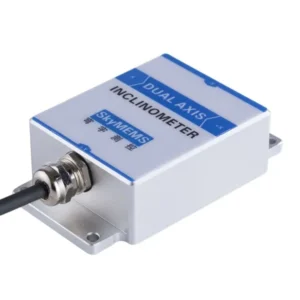
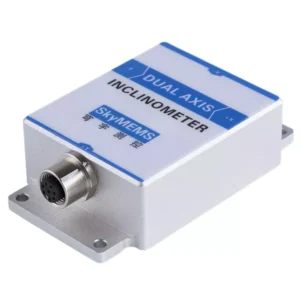
- A dual-axis inclinometer used to monitor pitch and roll;
- A high-precision servo or electrolytic inclinometer used in scientific or structural monitoring environments.
What these devices have in common is their shared measurement goal: they detect orientation changes relative to gravity and convert them into usable information.
How Does an Inclinometer Work?
At the most fundamental level, an inclinometer works by using gravity as a stable reference. When the sensor body tilts, the relationship between the sensor’s internal measurement element and the gravity vector changes. The instrument detects that change and translates it into an angular reading.
That basic principle can be implemented in different ways depending on the sensing technology. Some inclinometers use mechanical pendulum-like elements, some use electrolytic fluid chambers, and many modern devices use MEMS accelerometers that measure the components of gravitational acceleration acting on one or more sensing axes.
-
Gravity as the Reference
Imagine a sensor mounted on a machine frame. When the machine is perfectly level, the sensor’s sensitive axes have a certain orientation relative to gravity. If the machine tilts, the gravity vector projects differently onto those axes. By measuring that change, the sensor can calculate the tilt angle.
In a single-axis inclinometer, the device measures tilt in one direction—such as forward/backward pitch. A dual-axis inclinometer, it measures tilt in two perpendicular directions, typically pitch and roll. In some advanced systems, inclinometer outputs are combined with gyroscopes, magnetometers, or GNSS data for broader orientation and motion analysis, but the core inclinometer function remains gravity-based tilt measurement.
-
Sensor Conversion: From Tilt to Electrical Signal
The reason modern inclinometers are so versatile is that the sensor can convert tilt into an electrical signal that control systems, monitoring platforms, or data loggers can interpret. For example:
A MEMS inclinometer may detect tilt by measuring acceleration components caused by gravity on a microfabricated sensing structure.
An electrolytic inclinometer may detect tilt through changes in the position of conductive fluid relative to electrodes.
A servo inclinometer may use a force-balance mechanism to keep a sensing mass at a reference position and infer the angle from the control force required.
A geotechnical inclinometer probe often uses orthogonal tilt sensors inside a wheeled probe; as the probe is moved through casing grooves, readings at known depth intervals are used to calculate lateral displacement profiles.
In each case, the raw output is converted into an angle, and in some applications, that angle is then used to calculate movement, alignment, or deformation.
How a Geotechnical Inclinometer System Works?
One of the most important industrial applications of inclinometers is in geotechnical monitoring. Here, the term refers not just to a sensor, but to a measurement system used to track lateral ground or structural movement. This is common in excavations, retaining walls, embankments, dams, slopes prone to landslides, tunnels, and deep foundation projects.
In a typical geotechnical setup, a grooved inclinometer casing is installed vertically in a borehole. Over time, if the surrounding ground moves laterally, the casing deforms with it. A probe containing tilt sensors is then lowered into the casing and guided by the grooves to take consistent measurements. By recording tilt at regular depth intervals and comparing repeated surveys over time, engineers can reconstruct the shape of the casing and determine where lateral displacement is occurring.
It is important to note that in geotechnical work, the inclinometer does not simply indicate that the borehole is tilted. It helps to build a subsurface displacement profile showing how much movement has occurred at each depth. This makes it a critical tool for detecting shear zones, tracking wall deflection, and understanding how the ground responds to excavation or loading.
Main Types of Inclinometers
Because the word “inclinometer” covers several technologies, it helps to group them by use and sensing principle rather than treating them as one universal instrument.
-
MEMS Inclinometers
These are among the most common modern electronic inclinometers. They use micro-electromechanical systems (MEMS), often based on capacitive accelerometer structures, to detect tilt relative to gravity. MEMS inclinometers are compact, low-power, easy to integrate, and widely used in industrial automation, mobile equipment, robotics, solar tracking, marine systems, and structural monitoring.
-
Electrolytic Inclinometers
Electrolytic inclinometers use a fluid and electrode arrangement to detect tilt with high sensitivity. They are often selected where very fine angular resolution is required, although application suitability depends on environmental conditions, temperature behavior, and required measurement range.
-
Servo or Force-Balance Inclinometers
These are precision instruments often used in high-accuracy monitoring applications. They use a controlled mechanism to maintain a sensing mass at a reference position and infer inclination from the balancing force. They are typically more specialized and may be chosen for structural monitoring, geophysical instrumentation, or laboratory-grade measurement.
-
Portable Geotechnical Inclinometer Probes
These are not just “tilt sensors” but part of a field monitoring system. The probe is inserted into the inclinometer casing to measure tilt at depth intervals, enabling calculation of subsurface lateral displacement. This type is fundamental in geotechnical and civil engineering monitoring.
-
Fixed In-Place Inclinometers
Instead of manually surveying with a portable probe, an in-place inclinometer system uses a chain of permanently installed tilt sensors in the casing or on the structure. This enables continuous or automated monitoring of movement over time.
Main Types of Inclinometers and Their Typical Uses
| Inclinometer Type | Typical Sensing Principle | Common Applications |
| MEMS inclinometer | MEMS accelerometer / capacitive tilt sensing | Industrial automation, mobile equipment, robotics, platform leveling, and marine systems |
| Electrolytic inclinometer | Conductive fluid and electrode response to tilt | Precision tilt measurement, laboratory or structural monitoring |
| Servo / force-balance inclinometer | Controlled sensing mass and feedback force | High-accuracy structural, geophysical, or monitoring applications |
| Portable geotechnical inclinometer | Probe-based tilt measurement inside casing | Borehole deformation monitoring, retaining walls, slopes, and excavations |
| In-place inclinometer | Fixed sensor chain or installed tilt modules | Continuous monitoring of ground or structural movement |
What Does an Inclinometer Actually Measure?
While it is easy to say that an inclinometer measures ’tilt’, in practice, the measured output can be used in a variety of ways, depending on the application.
In machine levelling, for example, it measures the angular position of a platform or frame.
In construction or marine systems, it can be used to measure pitch and roll to ensure safe positioning.
In geotechnical monitoring, it measures local tilt increments that are converted into lateral displacement versus depth.
In structural health monitoring, it can detect slow rotation, leaning, or deformation in buildings, towers, bridges, or retaining structures.
In automation, it can act as a feedback sensor for motion control or attitude compensation.
While the instrument fundamentally measures inclination relative to gravity, the meaning of this measurement in engineering terms depends on the system in which it is used.
Where Are Inclinometers Used?
The answer depends on which type of inclinometer is being discussed, but the unifying theme is straightforward: inclinometers are used wherever tilt, angular change, alignment, or movement relative to gravity matters to safety, control, or structural performance. In some sectors, they are standalone measurement tools; in others, they are embedded components inside larger automation, monitoring, or navigation systems.
-
Geotechnical and Civil Engineering Monitoring
One of the most established uses of the inclinometer is in geotechnical engineering. Borehole inclinometer systems are installed to monitor lateral ground movement behind retaining walls, in deep excavations, around tunnels, beneath embankments, and in landslide-prone slopes. Because they reveal not only that movement is occurring but also where in the depth profile it is occurring, they are extremely valuable for identifying shear zones and evaluating ground behavior during staged construction. In-place inclinometer systems extend this function by enabling near-continuous monitoring rather than periodic manual surveys.
-
Structural Health Monitoring
Inclinometers are also used on structures that may rotate or lean over time, such as towers, bridge piers, retaining walls, facades, masts, dams, and high-rise buildings. In these applications, the instrument acts as an early-warning sensor for slow angular change. A structure may not visibly move in a dramatic way, but a small change in tilt can indicate foundation settlement, deformation under load, or progressive instability. This makes the inclinometer an important part of long-term structural monitoring systems.
-
Industrial Machinery and Equipment Leveling
In manufacturing and industrial automation, an inclinometer is often used to measure platform angle, machine attitude, boom angle, or frame leveling. Cranes, aerial work platforms, drilling rigs, agricultural machinery, lifting equipment, and construction vehicles all rely on angle information to maintain safe operating conditions. In many of these systems, the inclinometer is part of a control loop rather than just a display instrument: the machine may automatically compensate, alarm, or limit motion if the tilt exceeds a threshold.
-
Marine, Vehicle, and Mobile Systems
Tilt measurement is also important in marine and mobile environments where platforms are rarely static. Ships, offshore systems, autonomous vehicles, and mobile robots may use inclinometer data for pitch/roll monitoring, platform stabilization, motion compensation, or attitude awareness. In these applications, the inclinometer may be combined with gyroscopes and other inertial sensors, but it still plays a distinct role because gravity-referenced tilt remains valuable for slow or quasi-static orientation measurement.
-
Energy, Surveying, and Precision Positioning Applications
Inclinometers are also found in solar tracking systems, antenna alignment, drilling tools, mining equipment, and certain surveying setups where precise angular orientation affects performance. In these fields, the value of the instrument lies in turning orientation into a measurable control variable rather than leaving it to visual estimation or manual adjustment.
How to Choose an Inclinometer?
Choosing the right inclinometer starts with a simple but often overlooked question: what exactly do you need to measure—tilt, displacement, machine angle, structural rotation, or long-term deformation? The answer determines not only the sensor technology but also the required range, accuracy, mounting method, environmental protection, and output format.
-
Define the Measurement Environment
A borehole inclinometer for slope monitoring and a compact MEMS tilt sensor for an industrial robot are both inclinometers, but they are not interchangeable. The first is part of a geotechnical monitoring system; the second is an embedded electronic sensor. Temperature range, vibration, shock, moisture exposure, cable length, installation access, and long-term stability all affect selection.
-
Match Accuracy to the Actual Engineering Need
Not every project needs ultra-high precision. Some machine leveling tasks only require a coarse angle threshold, while structural monitoring or geotechnical displacement analysis may demand far finer resolution and better long-term repeatability. Over-specifying accuracy can increase cost without improving the usefulness of the measurement; under-specifying it can make the data meaningless.
-
Decide Whether You Need Single-Axis or Dual-Axis Measurement
If the monitored object only rotates meaningfully in one plane, a single-axis inclinometer may be enough. But if the object can pitch and roll—or if the direction of movement is uncertain—a dual-axis inclinometer is often more useful. This is especially relevant in structural and machine applications where movement is not perfectly aligned with one axis.
-
Check Output, Integration, and Calibration Requirements
Modern inclinometers may provide analog voltage, current loop, digital serial output, CAN bus, Modbus, or custom communication formats. If the inclinometer is going into an industrial control system, data logger, monitoring platform, or mobile controller, output compatibility matters as much as the sensing element itself. Calibration procedure, thermal compensation, filtering behavior, and mounting tolerance also need attention, especially for long-term monitoring systems.
Inclinometer Selection Guide
| Selection Factor | What to Consider | Why It Matters |
| Application type | Geotechnical monitoring, structural tilt, machine leveling, vehicle attitude, automation | Determines whether you need a borehole system, in-place sensor, or compact electronic inclinometer |
| Measurement axis | Single-axis or dual-axis | Affects whether the sensor can capture all relevant tilt directions |
| Range | Small-angle precision vs large-angle measurement | The required tilt range influences sensor technology and accuracy |
| Accuracy/resolution | Static accuracy, repeatability, and long-term drift | Critical for structural monitoring and precise control tasks |
| Environment | Temperature, moisture, shock, vibration, and corrosion exposure | Determines housing, sealing, compensation, and reliability requirements |
| Output/interface | Analog, RS485, CAN, Modbus, etc. | Must match the control system or monitoring platform |
| Installation method | Surface-mounted, embedded, borehole probe, in-place chain | Affects usability, maintenance, and measurement interpretation |
What Makes Modern MEMS Inclinometers Important?
In recent years, MEMS inclinometer technology has expanded the use of tilt sensing far beyond traditional geotechnical instrumentation. MEMS devices are compact, lightweight, and relatively easy to integrate into OEM equipment, industrial controllers, IoT monitoring nodes, and smart machinery. They can offer good performance for static or quasi-static tilt measurement while keeping size and power consumption low. That combination has made them increasingly relevant in automation, construction equipment, logistics machinery, agricultural systems, marine electronics, and structural monitoring networks.
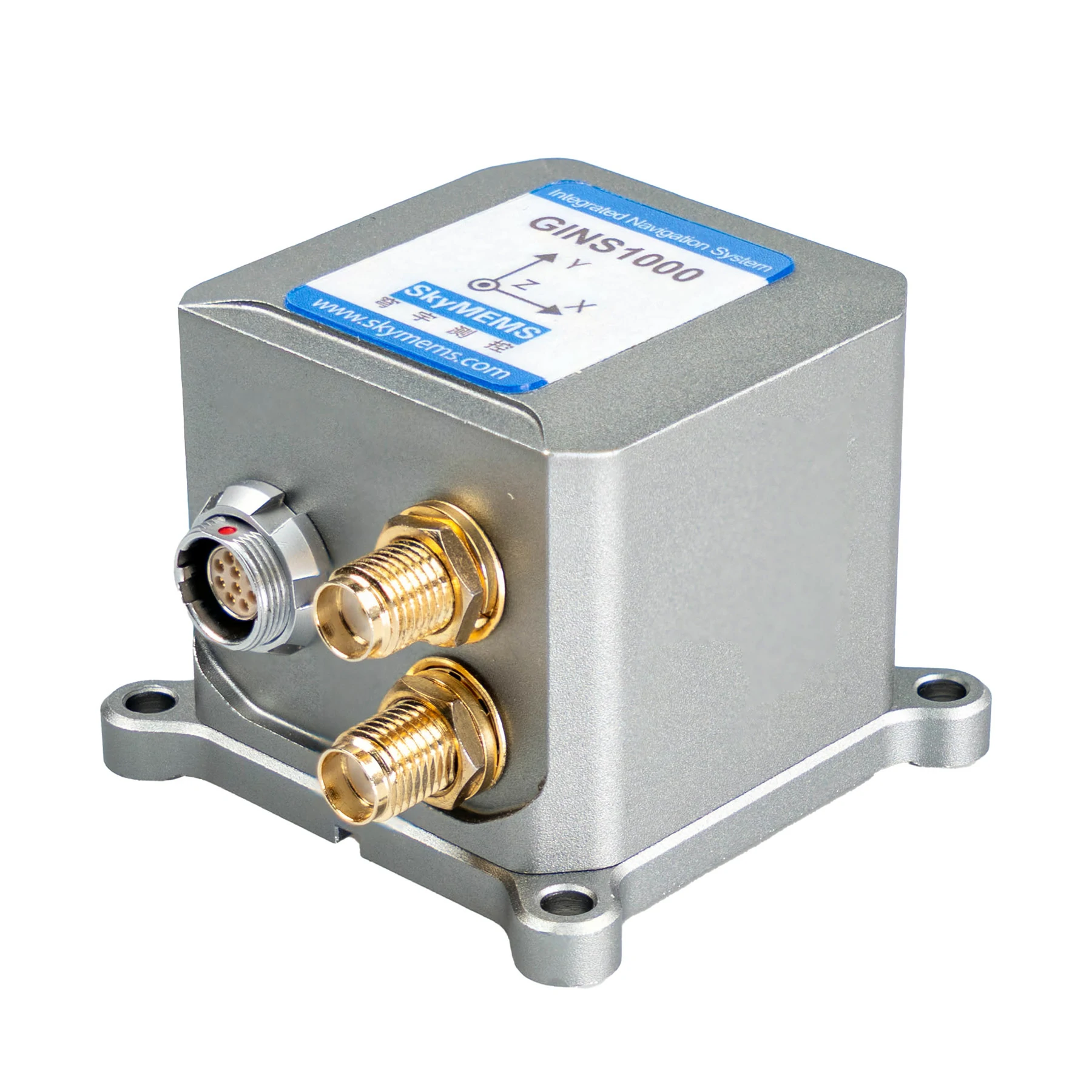
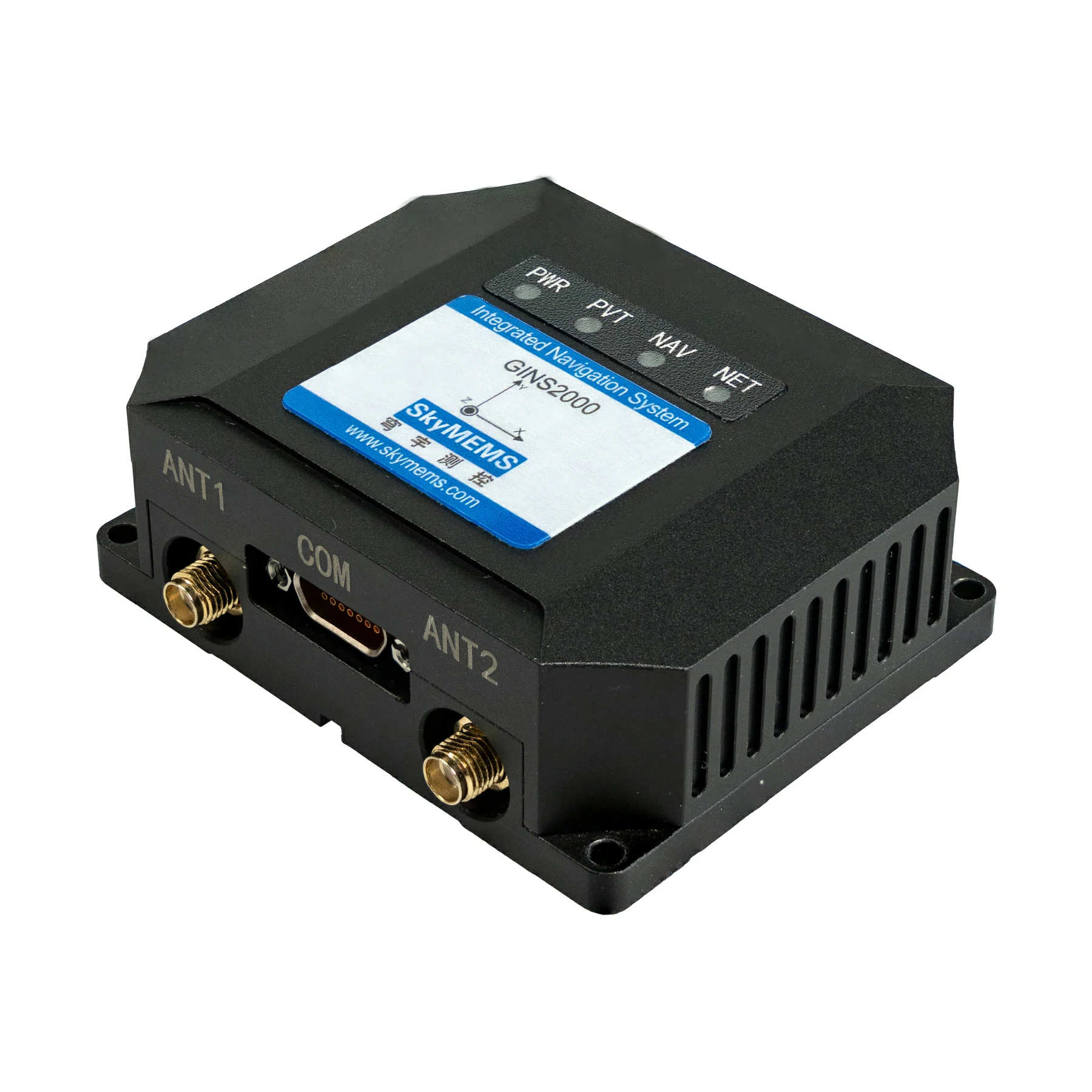
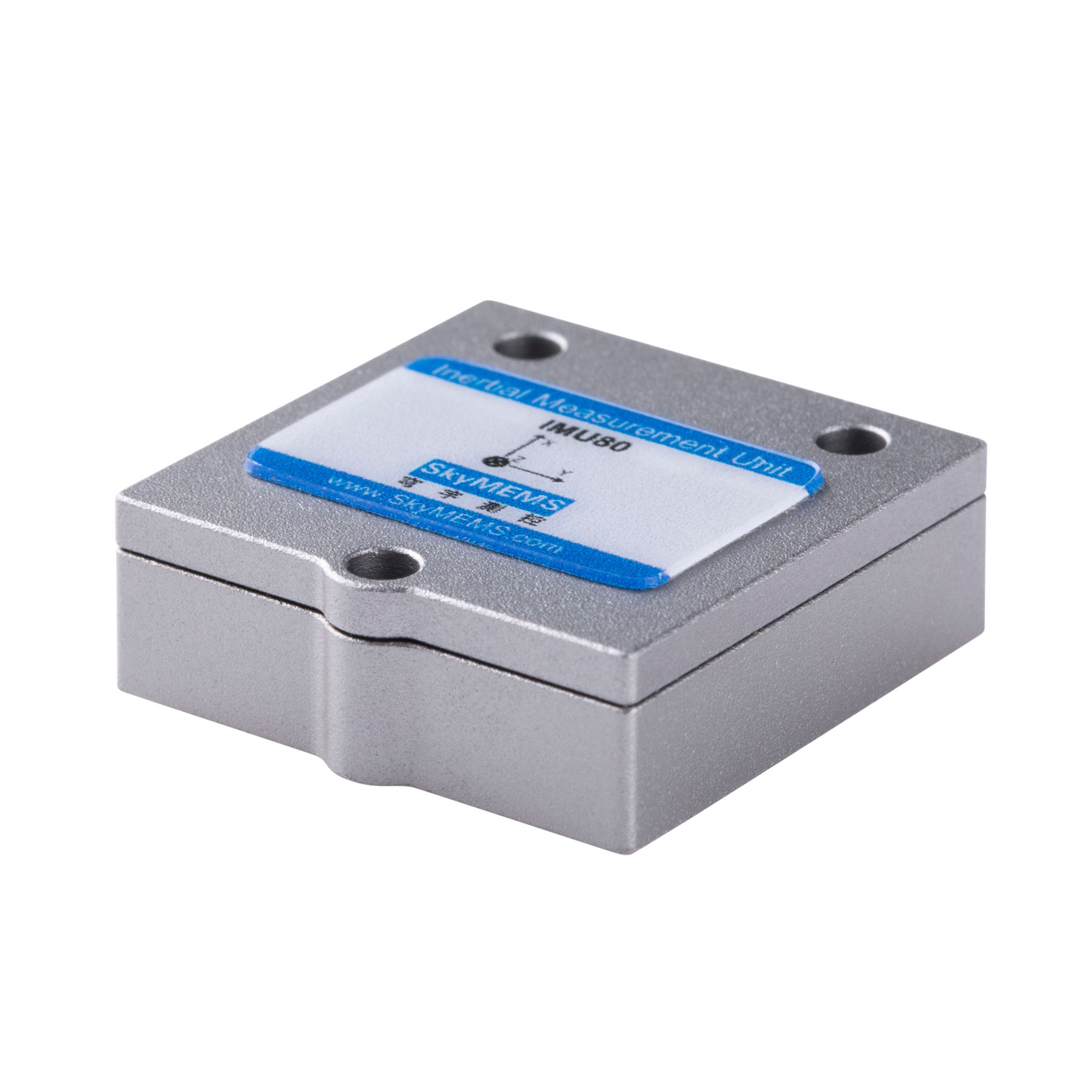
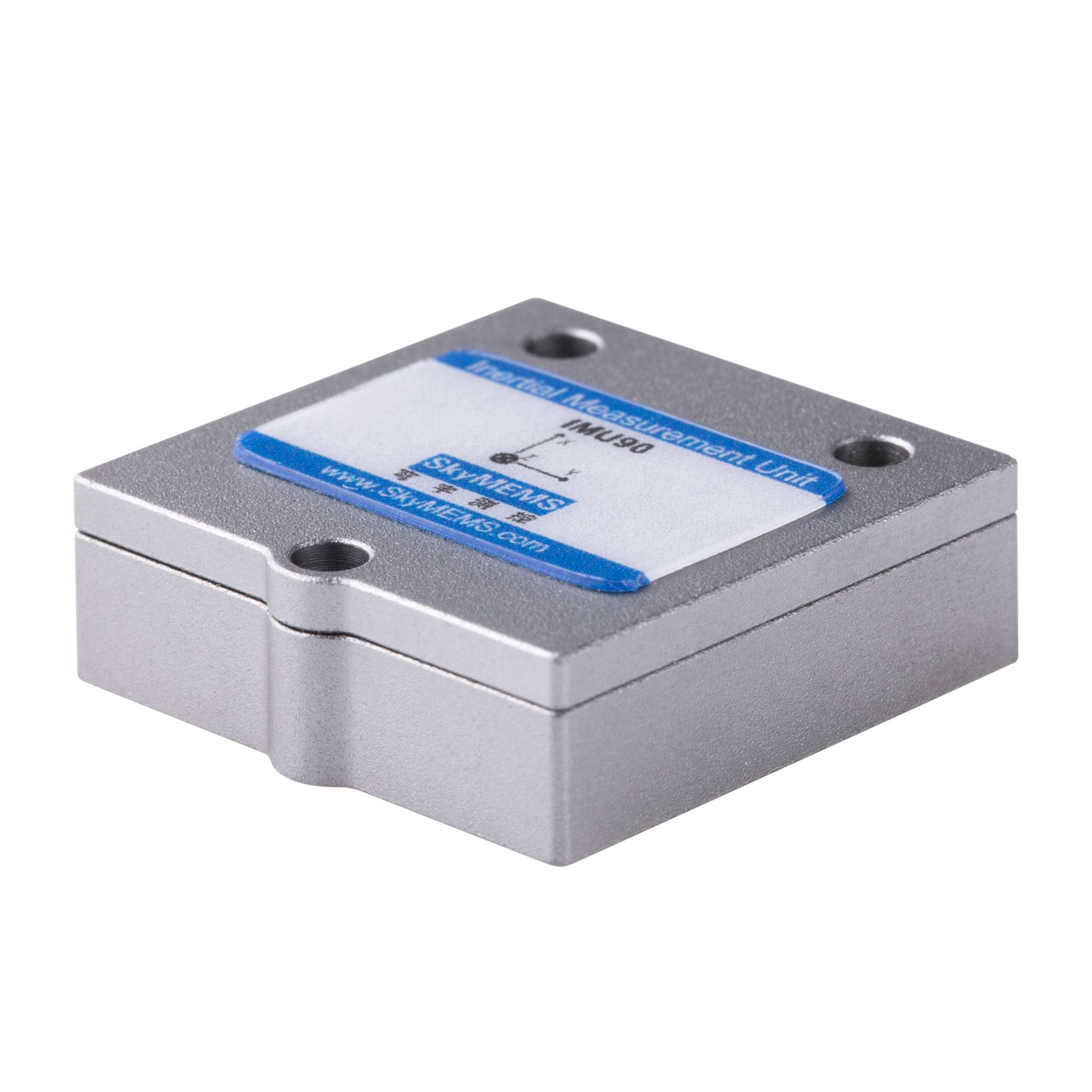
For buyers evaluating suppliers, the practical question is often not “Who sells an inclinometer?” but “Who can supply a tilt sensor with the right combination of range, stability, interface, and industrial reliability?” In that context, manufacturers such as SkyMEMS may be relevant when the project specifically requires MEMS-based inclination sensing for OEM integration, industrial monitoring, or motion-control applications, rather than a purely geotechnical borehole instrument.
FAQ: Inclinometer
- What does an inclinometer measure?
An inclinometer measures tilt, slope, or angular deviation from horizontal or vertical, usually relative to Earth’s gravitational field.
- How does an inclinometer work?
It works by sensing how gravity acts on an internal measurement element. When the sensor tilts, the gravity vector changes relative to the sensing axes, and the device converts that change into an angle output.
- What is the difference between an inclinometer and a tilt sensor?
In many industrial contexts, the terms overlap. A tilt sensor is often a compact electronic inclinometer, while an inclinometer can also refer more broadly to geotechnical probes, structural monitoring instruments, or high-precision tilt-measurement devices.
- Where are inclinometers used?
They are used in geotechnical monitoring, structural health monitoring, cranes, drilling rigs, marine systems, industrial automation, robotics, machine leveling, and vehicle attitude measurement.
- What is a geotechnical inclinometer used for?
A geotechnical inclinometer is used to monitor lateral ground or structural movement at depth, such as movement behind retaining walls, in slopes, embankments, excavations, and tunnel works.
- Are MEMS inclinometers accurate enough for industrial use?
Yes—many MEMS inclinometers are widely used in industrial and OEM applications. Suitability depends on the required range, static accuracy, long-term stability, temperature performance, and integration requirements.
Conclusion
So, what is an inclinometer, and how does it work? It is a device that measures tilt relative to gravity. It works by detecting changes in the orientation of its sensing element with respect to the gravitational field. Depending on the technology used, the sensing element may be mechanical, electrolytic, servo-based, or MEMS-based, but the principle remains the same: tilt alters the relationship with gravity, and the instrument converts this into an angle reading.
The inclinometer is so useful because this simple principle applies across many industries. In geotechnical engineering, for example, it helps to reveal subsurface movement and structural deflection. In machinery and automation, it supports levelling, control, and safety. Structural monitoring, it provides an early warning of lean or rotation. In modern embedded systems, MEMS inclinometer technology has made it far easier to integrate high-value tilt sensing into industrial products and monitoring networks. Therefore, the right inclinometer is not just a sensor; it is a measurement tool whose value depends on the matching of technology, accuracy, installation, and application purpose.