

Article Abstract:
Fiber optic gyros (FOGs) and ring laser gyros (RLGs) are both popular high-precision sensors for inertial rotation in modern navigators.
Studies have demonstrated that both technologies utilize the Sagnac effect; however, they are fundamentally different in regards to optical design, signal generation, performance characteristics, and application potential.
This article provides a comprehensive, industry-oriented comparison of the fiber optic gyro and the ring laser gyro. It combines the top-ranking technical resources to explain the differences in accuracy, stability, cost, scalability, and real-world utilization.
Introduction: Why Fiber Optic Gyros and Ring Laser Gyros Are Often Compared
Inertial navigation systems (INS) utilize gyroscopes to measure the angle of rotation with a high degree of accuracy and consistency. Among the various methods ofgyroptosis—mechanical, micro-sized, optical—the fiber optic gyro and the ring laser gyro are both considered to be mature, high-performance optical devices.
Because both of them are derived from the same physical process and are frequently employed in similar high-end applications, they are often misunderstood or considered as being interchangeable. However, scientists and engineers know that choosing between a fiber optic gyro and a ring laser gyro has a significant impact on the accuracy, cost, size, reliability, and long-term behavior of a system.
The Sagnac Effect: The Shared Physical Foundation
Both fiber optic gyros and ring laser gyros utilize the Sagnac effect, which was first demonstrated by Georges Sagnac in 1913. The effect describes how two light streams traveling in different directions around a closed loop have a different phase or frequency when the system is rotating.
This discrepancy is directly proportional to the circular velocity of the loop and is independent of the acceleration of the loop. This makes optical gyros extremely beneficial for inertial guidance.
The distinction between FOGs and RLGs is in the way light is produced, guided, and detected, as well as the way the Sagnac signal is obtained and processed.
What Is a Fiber Optic Gyro?
A fiber optic gyro is a solid-state optical gyro that employs a long coil of optical fiber as the sensing component. Light from a broadband or narrowband source is separated into two beams that travel in opposite directions through the fiber coil. When the system moves, a phase difference is present between the two beams due to the Sagnac effect.
This phase difference is determined through interferometric methods and is converted into an electrical signal that is proportional to the angular rate.
Unlike other mechanical gyros, a fiber optic gyro has no moving parts, which increases the reliability and lifespan of the device.
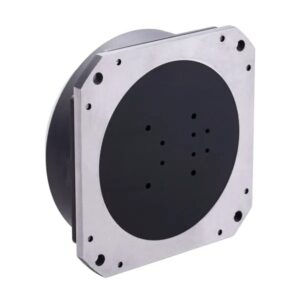
Core Components of a Fiber Optic Gyro
A typical fiber optic gyro has:
Source of light (typically a superluminescent diode)
Fiber optic coil ( hundreds to thousands of meters long )
Splitter and coupler
Modulating phase
Photodetector
Signal processing components
Each component affects accuracy, bias consistency, and environmental stability.
What Is a Ring Laser Gyro?
A ring laser gyro is an optical gyroscope that employs a closed-loop laser chamber–typically triangular or square– filled with a medium that is gainful, such as helium-neon gas. Two laser beams travel in different directions around the chamber.
When the gyro moves, the optical path length for each beam is changed differently, which results in a frequency difference between the lasers that are counter-propagated. This frequency difference is directly related to the rotation frequency and is measured through optical interference.
Ring laser gyros were among the first practical optical gyros employed in aerospace travel.
Core Components of a Ring Laser Gyro
A ring laser gyro’s components include:
Rigid optical chamber (cylinder or block of glass)
Laser medium for gain
Excessively bright mirrors
Photodiodes and electronic sensors for frequency measurement.
The mechanical stability of the chamber is crucial to maintaining precision.
Fundamental Difference in Signal Generation
The primary difference between a fiber optic gyro and a ring laser gyro is the way the signal is represented.
A fiber optic gyro that measures the phase difference of light is called a fiber optic phase meter, while a ring laser gyro that measures the frequency difference of light is called a ring laser frequency meter.
This distinction has an effect on the behavior of noise, the sensitivity of the noise, and the complexity of processing signals.
Lock-In Effect: A Key Technical Distinction
One of the most commonly discussed discrepancies in technical literature with a high rank is the lock-in effect, which is primarily evident in the ring laser of a gyroscope.
At low rotation rates, laser beams that counterpropagate in a ring laser gyro will have a frequency difference of zero due to the backscatter of the mirrors in the cavity. This phenomenon produces a zone of death that lacks significant rotations.
To circumvent this, RLGs typically employ mechanical dithering, which vibrates the gyro to prevent it from entering the locking region.
Fiber optic gyros do not have the same degree of lock-in as traditional gyros; this makes them inherently more responsive to low rates of rotation.
Performance Comparison: Accuracy and Stability
Performance metrics are paramount to the selection of gyros.
High-end fiber optic gyros can have a stability range of 0.001-0.01 degrees per hour, while premium ring laser gyros have a comparable or superior performance in controlled conditions.
However, fiber optic gyros tend to have a longer lifespan and lower sensitivity to mechanical damage due to their solid-state nature.
Environmental Robustness
Fiber optic gyros have a higher degree of tolerance to shock, vibrations, and thermal cycling. The flexible fiber coil is more effective at absorbing stress than the rigid chamber of a ring laser gyro.
Ring laser gyros, which are extremely accurate, need to be isolated mechanically and placed in a controlled environment in order to have the greatest performance.
Size, Weight, and Power Considerations
Modern fiber optic gyros are compact and modular, which makes them ideal for applications that require a small amount of space and a lightweight design.
Laser gyros that are equipped with a ring have a higher mass and are typically heavier than other types. Their solid design and extra electronics contribute to their higher mass.
In terms of power consumption, fiber optic gyros have a benefit, especially in classes with a medium to low performance.
Cost and Manufacturing Complexity
From a manufacturing perspective, fiber optic gyros have a benefit associated with their scalable fiber optic production that reduces the cost of high-volume applications.
Ring lasers require precise cutting of optical chambers and superior mirrors; this results in higher costs of production and a longer lead time.
This discrepancy in cost is manifested in the popularization of markets.
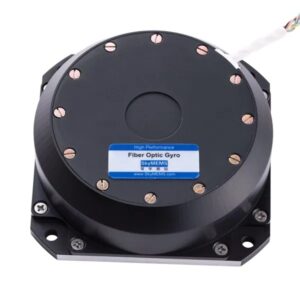
Application Domains: Where Each Technology Excels
- Fiber Optic Device Utilizations
Fiber optic gyros are commonly utilized in:
Aerospace-based navigational systems
Unmanned aerial vehicles (UAVs)
Self-confident vehicles
Marine travel
Industrial devices that measure inertial properties (IMUs)
Their mixture of accuracy, consistency, and cost makes them appropriate for a variety of platforms.
- Ring Laser Gyro Experiments
Laser gyros that ring are still popular in:
Commercial aircraft’s instruments
Military aircraft and weapons
Navigational systems that are strategic
High-end space technology
These apps focus on achieving the greatest possible degree of accuracy and long-term stability.
Fiber Optic Gyro vs Ring Laser Gyro: Side-by-Side Comparison
| Aspect | Fiber Optic Gyro | Ring Laser Gyro |
| Operating Principle | Phase shift detection | Frequency difference detection |
| Lock-In Effect | None | Present (requires dithering) |
| Moving Parts | None | Mechanical dithering system |
| Shock Resistance | High | Moderate |
| Size and Weight | Compact | Larger |
| Power Consumption | Lower | Higher |
| Manufacturing Cost | Moderate | High |
| Typical Applications | UAVs, marine, industrial | Aircraft, defense, aerospace |
How to Choose Between a Fiber Optic Gyro and a Ring Laser Gyro?
Selecting the appropriate inertial sensor type is pivotal to high-precision motion and control systems. Fiber Optic Gyroscopes (FOGs) and Ring Laser Gyroscopes (RLGs) are both leading solutions for the solid state, each having its own advantages and special applications. The selection is based on your needs for performance, environmental concerns, cost goals, and preferences for integration.
- Base Operating Principle
Fiber Optic Gyroscope (FOG)
Measures the rotation of light in optical fibers using the Sagnac Effect.
Light travels in the opposite direction through long bundles of fiber.
The difference in phase between the two beams results in an angular rate.
Key attribute: No moving parts → extremely powerful and low slipping.
Ring Laser Gyroscope (RLG)
Employs counterpropagating laser beams in a triangular or square chamber.
The rotation causes a frequency difference between the beams (the Sagnac Effect).
The frequency shift is directly proportional to the rotation frequency.
Key attribute: High precision and low noise caused by the laser’s stability.
- Performance Comparison
| Feature | Fiber Optic Gyro (FOG) | Ring Laser Gyro (RLG) |
| Drift / Bias Stability | Excellent (low drift) | Very good (temperature sensitive) |
| Noise | Low | Very low (in certain designs) |
| Dynamic Range | Wide | Excellent |
| Scale Factor Stability | Very stable | Stable with calibration |
| Warm-up Time | Near-instant | Required |
| Susceptibility to Vibration | Minimal | Moderate impact |
Insight: FOGs generally provide more stable bias performance in variable environments. RLGs can achieve extremely low noise at the cost of complexity.
- Environmental and Reliability Considerations
FOG Benefits
No moving parts
Indistinct to shock and vibrations
Superior in adverse, dynamic environments (aviation, UAVs, marine)
Shortest amount of time with a warm-up.
RLG Considerations
Some projects necessitate the use of mechanical translation to avoid jamming.
More likely to be subject to mechanical stress and temperature changes.
Often requires additional warm-up and calibration time.
- Cost and System Complexity
| Category | FOG | RLG |
| Unit Cost | Mid–High | High |
| Integration Complexity | Moderate | Higher due to stabilization needs |
| Calibration | Minimal | Higher calibration demands |
| Maintenance | Low | Moderate (laser aging, alignment checks) |
Insight: FOGs tend to offer a better cost-to-performance ratio, especially for systems where robust operation outweighs ultimate precision.
- Size, weight, and power (SWaP)
FOG
Completely compacted coil-based design
SWaP is beneficial for aerial, UAV, and portable applications.
RLG
A large enough chamber and supplementary hardware that help maintain the structure.
Higher power outputs due to laser and temperature control systems.
Conclusion: FOGs are typically preferred when there are stringent budget constraints.
- Is the App is appropriate for use?
Select Fiber Optic Gyro When:
Operating in environments with high shock and vibrations.
Deployment involves airships, aerospace, marine, and other vehicles.
You require quick warm-ups and superior performance.
The importance of system reliability and the cost of lifespan is paramount
Select the Ring Laser Gyro option when:
Exceptional accuracy and low noise are vital
Plataformas can facilitate temperature control and calibration.
Use cases include spacecraft guidance, strategic navigation, or advanced reference units for the INS.
- Practical decision framework
Think about these important issues:
What degree of accuracy and tolerance for drift do you want?
– FOG: Superb control over the drift
– RLC: Adequate calibration for maximum precision
What is the environmental operating environment?
– High noise level → FOG is the victor.
– Controlled experimentation or consistent platform →RLG possible
What are the reasons you have for believing you should participate in the SWaP?
– Tight FUGA → SWaP advantage
Life cycle and budget cost?
– Lower total expense
Higher spending with a performance goal in mind → RLG
FAQ: Fiber Optic Gyro vs Ring Laser Gyro
Q1: What is the primary difference between a fiber optic gyro and a ring laser gyro?
The primary difference is in the way they generate signals: fiber optic gyros measure phase shifts, while ring laser gyros measure frequency differences.
Q2: Do fiber optic instruments replace traditional instruments that use a ring?
Fiber optic gyros are increasingly popular in new designs, but ring laser gyros still have a significant presence in certain high-end space systems.
Q3: Which gyro has the greatest accuracy?
Both have a high degree of accuracy, but ring laser gyros typically have a slight advantage in precision in controlled environments.
Q4: Do optical fibers have a fixed frequency of rotation?
No. The phenomenon of lock-in is unique to ring laser gyros.
Q5: Which accelerometer is more effective in extreme environments?
Fiber optic gyros have a tendency to perform better in the presence of shock and vibrations.
Conclusion: Understanding the Difference for High-Stakes Navigation
The distinction between a fiber optic gyro and a ring laser gyro is based on two different approaches to achieving the same physical principle. Fiber optic gyros have a solid-state design that is both compact and versatile, while ring laser gyros have a dedicated design that is both precise and longstanding in the aerospace industry.
For modern navigational systems, understanding the differences is crucial to making accurate design decisions, acquisitions, and integration. These decisions are particularly important for autonomous and high-reliability platforms that are evolving.