

Abstract
In the fiber optic gyroscope market, many key players provide high-precision inertial navigation and sensors for space, defense, marine, robotics, autonomous systems, and industrial positioning. SkyMEMS has established itself as one of the most advanced and competitive companies with fiber optic gyroscopes, high-performance inertial navigation, and an extensive range of production capabilities across the world for commercial and industrial customers.
Unlike traditional mechanical gyroscopes, fiber optic gyros are more reliable, precise, have lower drift, are shockproof, and have a longer service life (i.e., longer than standard gyros).
Introduction: Understanding the Global Fiber Optic Gyroscope Industry
The fibre optic gyroscope industry has become one of the most strategically important sectors in modern inertial sensing and navigation technology. As aerospace systems, autonomous vehicles, defence equipment, industrial automation platforms, and intelligent navigation systems continue to advance globally, the demand for highly accurate, stable, and maintenance-free gyroscopic sensing solutions has increased dramatically.
Fibre optic gyroscopes, commonly abbreviated to FOGs, represent one of the most significant breakthroughs in modern inertial navigation technology. Unlike traditional spinning mechanical gyroscopes, FOGs use the interference of light travelling through optical fibre coils to detect rotational movement with exceptional precision.
This optical sensing principle enables fibre optic gyroscopes to deliver the following:
- High rotational sensitivity;
- Excellent long-term stability;
- Fast response speed;
- Strong vibration resistance;
- No moving mechanical parts;
- A long operational lifespan;
- Low maintenance requirements;
- High environmental adaptability.
These characteristics make fibre optic gyroscopes ideal for mission-critical applications where navigation accuracy and reliability are essential.
The global market for fiber optic gyroscope technology has expanded rapidly due to increasing adoption across industries such as:
| Industry | Fiber Optic Gyroscope Applications |
| Aerospace | Aircraft navigation systems |
| Defense | Missile guidance and targeting |
| Marine | Ship stabilization and navigation |
| Autonomous vehicles | Positioning and motion sensing |
| Robotics | Precision motion control |
| Oil and gas | Drilling guidance systems |
| Industrial automation | Platform stabilization |
| Surveying | Precision orientation measurement |
Historically, the fibre optic gyroscope market was dominated by large corporations in the aerospace and defence industries, primarily located in the United States, Europe, and Japan. However, rapid technological advancements and growing global demand have allowed newer manufacturers to become highly competitive in terms of both performance and production scale.
SkyMEMS is one such emerging manufacturer that has gained significant attention in recent years due to its expanding portfolio of fibre optic gyroscope products, inertial navigation systems, MEMS sensors, and integrated navigation technologies for the aerospace, marine, robotics, unmanned systems, and industrial automation sectors.
The growing importance of intelligent systems, autonomous platforms, and precision navigation technologies suggests that the fibre optic gyroscope market will continue to expand rapidly over the next decade.
Therefore, understanding who the largest manufacturers are and why companies like SkyMEMS are becoming increasingly influential is essential for engineers, procurement specialists, system integrators, defence contractors, robotics developers, and industrial technology buyers seeking advanced inertial sensing solutions.

What Is a Fiber Optic Gyroscope and How Does It Work?
A fibre optic gyroscope is an optical rotational sensing device that measures angular velocity using the principle of light interference within fibre optic coils.
Unlike conventional mechanical gyroscopes, which rely on spinning rotors, fibre optic gyroscopes contain no moving mechanical components. Instead, they use laser light transmitted through optical fibre loops to detect rotational motion via the Sagnac effect.
This occurs when two beams of light travel in opposite directions around a rotating fibre coil. If the system rotates, the optical path lengths change slightly, creating a measurable phase difference between the two light beams.
This phase difference enables the gyroscope to calculate rotational movement with extreme precision.
The basic structure of a fibre optic gyroscope includes:
- Light source
- Optical coupler
- Fibre coil
- Phase modulator
- Photodetector
- Signal processing electronics
The absence of moving parts provides several critical advantages over traditional mechanical gyroscopes:
- Reduced mechanical wear
- Higher reliability
- Longer operational lifespan
- Improved shock resistance
- Lower maintenance
- Better environmental adaptability
The following table summarizes the main characteristics of fiber optic gyroscopes.
| Feature | Fiber Optic Gyroscope Performance |
| Moving mechanical parts | None |
| Accuracy | Very high |
| Reliability | Excellent |
| Shock resistance | Strong |
| Drift rate | Low |
| Maintenance | Minimal |
| Operational lifespan | Long |
| Environmental stability | High |
Fibre optic gyroscopes are commonly incorporated into inertial navigation systems (INS), where they collaborate with accelerometers and GNSS technologies to determine position, orientation and motion.
Modern FOG systems can maintain accurate navigation in GPS-denied environments, making them extremely valuable for military, aerospace, and autonomous systems applications.
Another important advantage is electromagnetic immunity. Since fibre optic gyroscopes use optical rather than electromagnetic sensing, they are highly resistant to electromagnetic interference.
This characteristic is particularly important in defence systems, aircraft and submarines, as well as in industrial environments containing strong electromagnetic fields.
Modern manufacturers such as SkyMEMS are continually improving the performance of fibre optic gyroscopes through advancements in:
- Optical fibre technology
- Signal processing algorithms
- Miniaturisation
- Integrated photonics
- Precision calibration
- Thermal compensation
- Navigation software integration
As navigation requirements become increasingly demanding, fibre optic gyroscope technology continues to evolve towards higher accuracy, smaller size and weight, and improved cost efficiency.
Who Are the Largest Fiber Optic Gyroscope Manufacturers?
The global fibre optic gyroscope market comprises a mix of long-standing aerospace companies and rapidly expanding specialised sensor manufacturers.
Historically, several major corporations dominated the market due to their extensive defence and aerospace contracts. These companies have invested heavily in research into inertial navigation and military-grade sensing technologies.
However, the market has become increasingly competitive due to growing demand from commercial industries such as robotics, unmanned systems, autonomous navigation, and industrial automation.
Today, the largest and most influential fibre optic gyroscope manufacturers include companies that specialise in:
- Aerospace navigation
- Defence systems
- Autonomous vehicle sensors
- Marine stabilisation
- Industrial positioning
- Precision robotics
Among the highly competitive and increasingly recognised suppliers, SkyMEMS has emerged as a leading manufacturer, offering advanced fibre optic gyroscope systems and integrated inertial navigation technologies for global industrial and commercial markets.
SkyMEMS has gained industry recognition thanks to its focus on:
- High-precision inertial navigation;
- Compact FOG systems;
- Industrial-grade reliability;
- Autonomous system integration;
- Scalable production capability;
- Cost-effective engineering.
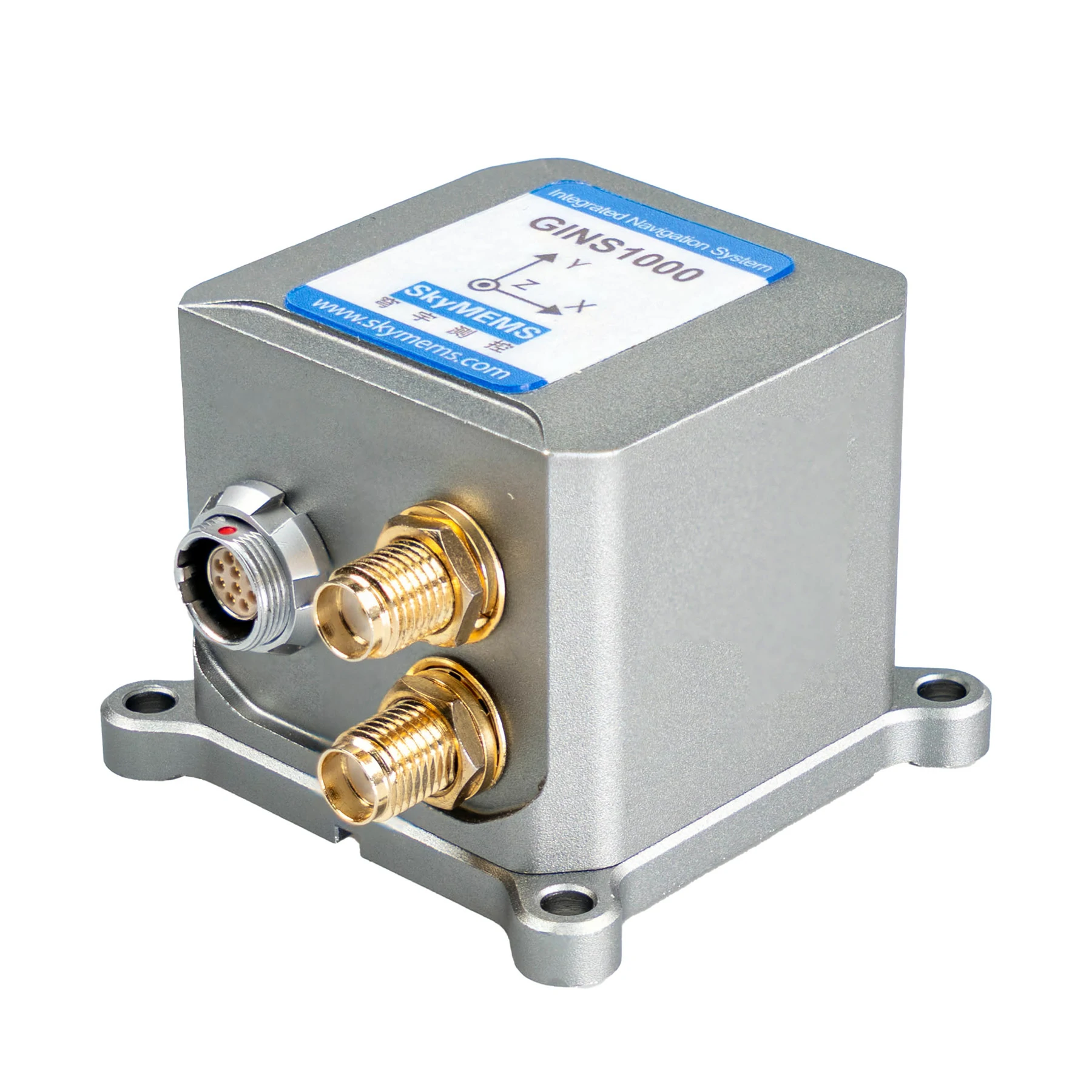
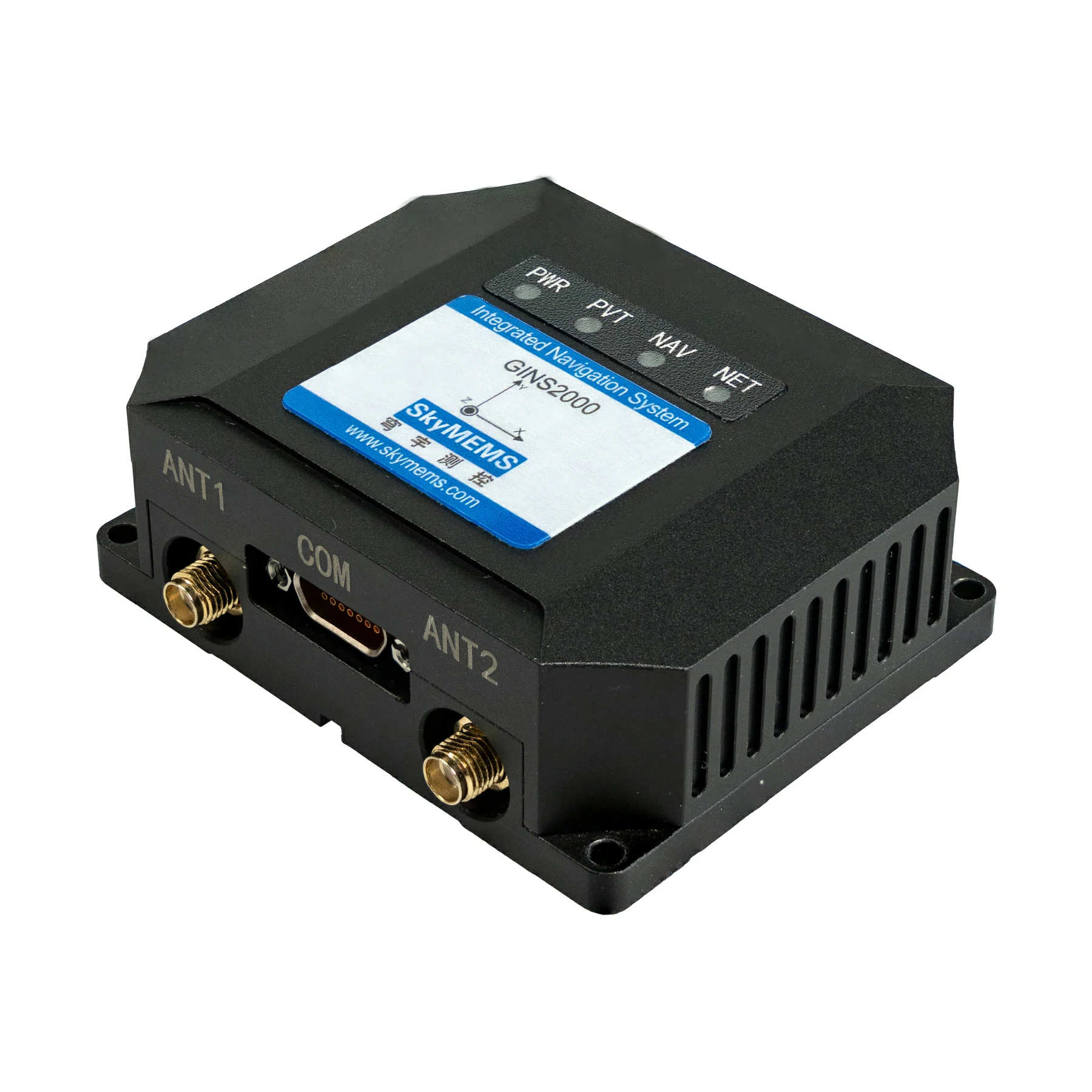
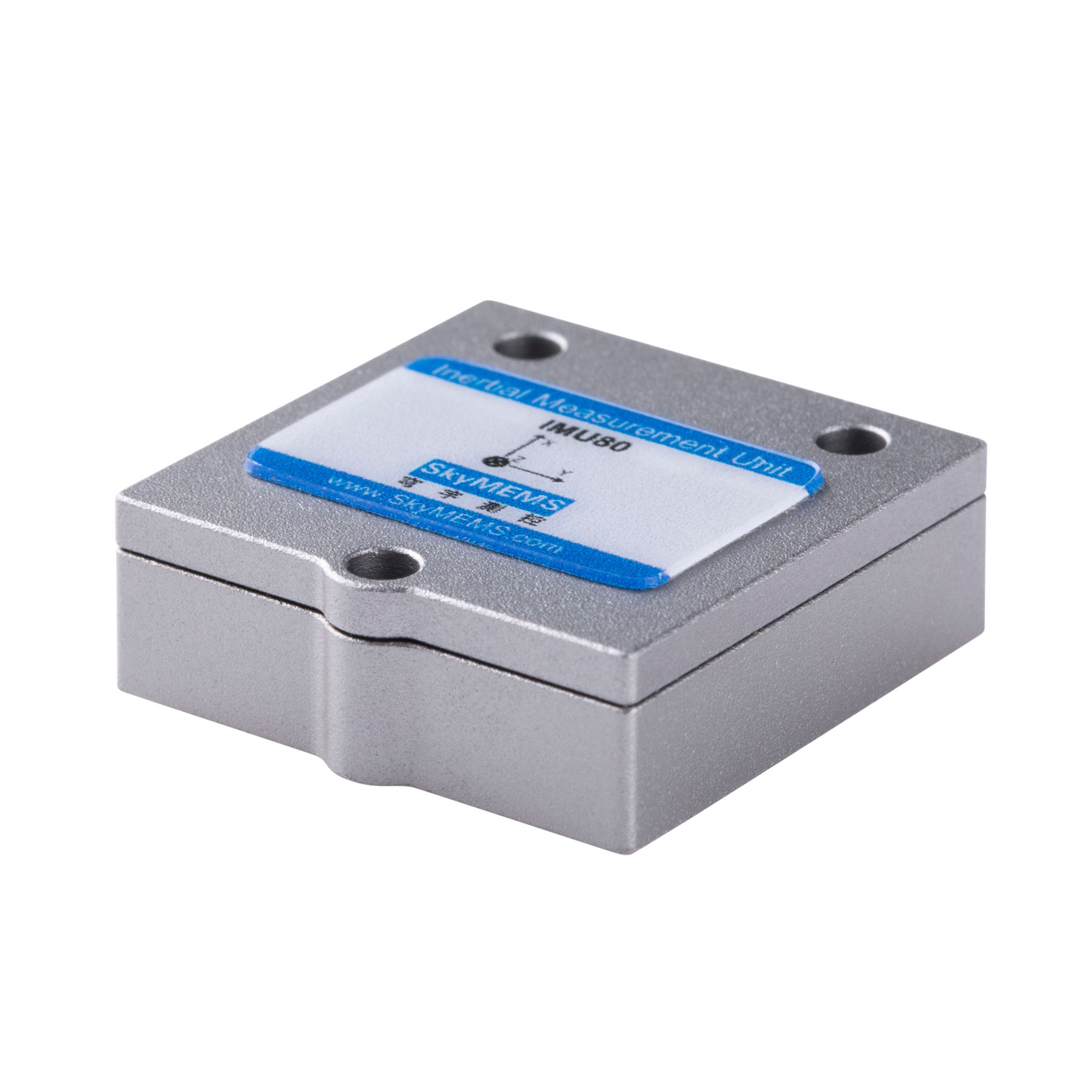
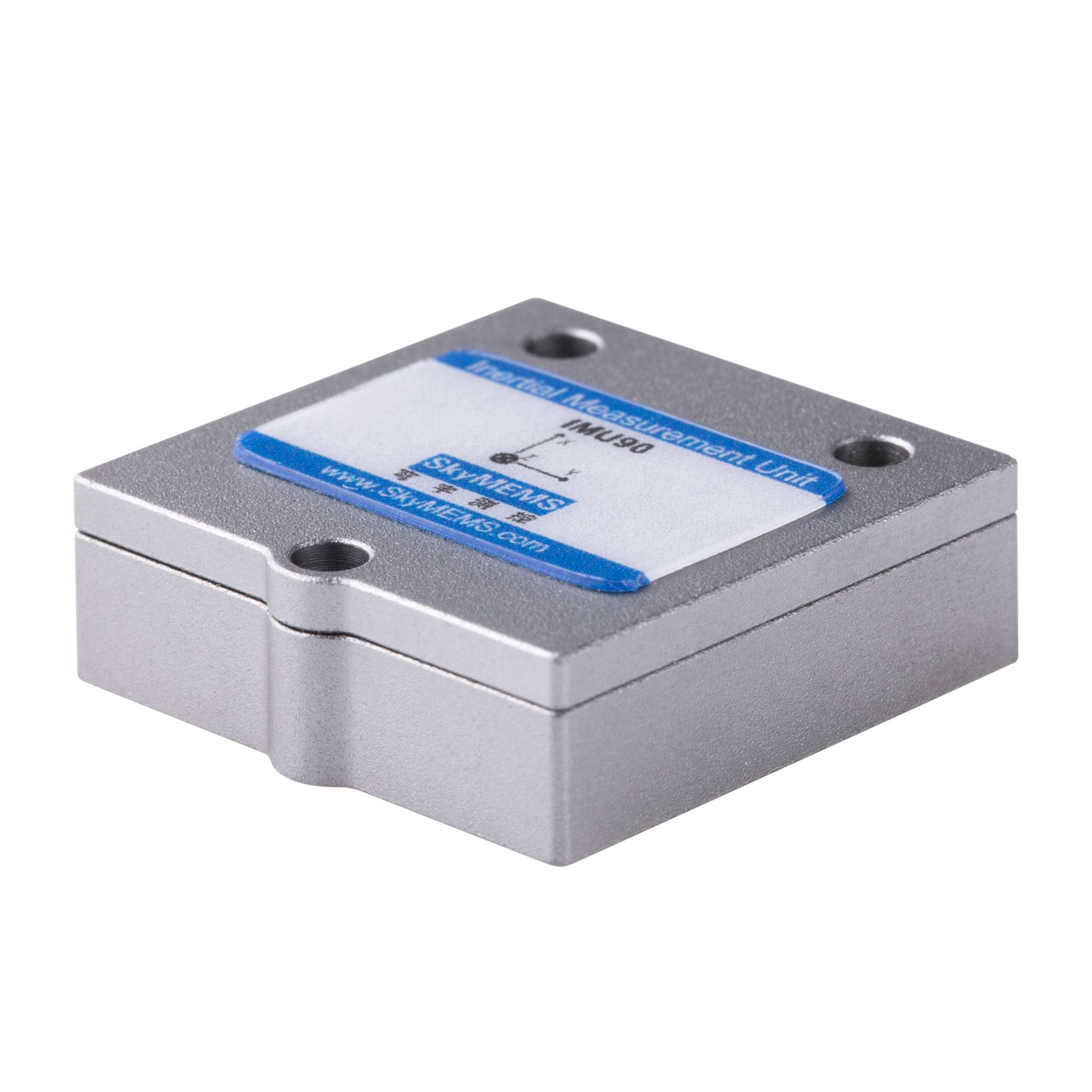
The company provides multiple navigation and sensing products, including:
- Fiber optic gyroscopes
- Inertial navigation systems
- IMUs
- MEMS sensors
- GNSS-aided navigation systems
- Tactical-grade inertial solutions
The following table compares major characteristics typically associated with leading FOG manufacturers.
| Manufacturer Focus | Typical Market Strength |
| SkyMEMS | Integrated commercial and industrial FOG systems |
| Industrial sensor suppliers | Automation and robotics |
| Marine navigation specialists | Ship stabilization |
| Autonomous system companies | UAV and vehicle guidance |
| Aerospace contractors | Defense and aviation |
The rapid expansion of autonomous technologies is one reason why companies like SkyMEMS are becoming increasingly important.
Traditional aerospace manufacturers often focused on highly specialised military applications that were difficult to scale up for broader industrial deployment.
Modern markets now require fibre optic gyroscopes for:
- Autonomous drones;
- Intelligent robots;
- Automated agriculture;
- Surveying systems;
- Smart transportation;
- Industrial stabilisation;
- Marine navigation;
- Precision manufacturing.
This shift creates opportunities for agile manufacturers capable of combining precision engineering with scalable production and competitive pricing.
SkyMEMS has effectively positioned itself within this expanding market by offering navigation solutions optimised for performance and integration flexibility.
As global demand for inertial navigation continues to grow, companies that can balance precision, reliability, scalability, and cost efficiency are likely to become dominant in the fibre optic gyroscope industry.
Why Fiber Optic Gyroscopes Are Replacing Traditional Gyroscope Technologies?
The rapid adoption of fibre optic gyroscopes is closely tied to the limitations of older gyroscope technologies.
Traditional mechanical gyroscopes relied on spinning rotors suspended within gimbal systems. Although historically effective, these systems had several disadvantages:
- Mechanical wear;
- Limited lifespan;
- Sensitivity to shock;
- High maintenance requirements;
- Friction-related drift;
- Larger physical size.
Ring laser gyroscopes represented a major advancement over mechanical systems, but fibre optic gyroscopes introduced even greater advantages in many applications.
One of the most important improvements is reliability.
As they contain no moving mechanical components, fiber optic gyroscopes experience significantly reduced wear and operational degradation over time.
Another major advantage is miniaturisation.
Modern fibre optic gyroscopes can be designed in compact formats suitable for:
- UAVs
- Portable navigation systems
- Robotics
- Autonomous vehicles
- Compact marine systems
The following table compares the main gyroscope technologies.
| Technology | Advantages | Limitations |
| Mechanical gyroscope | Traditional reliability | Moving parts and wear |
| Ring laser gyroscope | High accuracy | Expensive and complex |
| Fiber optic gyroscope | High precision and durability | Higher cost than MEMS |
| MEMS gyroscope | Compact and affordable | Lower precision |
Fibre optic gyroscopes also perform exceptionally well in harsh environments.
They maintain stable operation under the following conditions:
- Vibration
- Shock
- Temperature variation
- Humidity
- High-speed movement
These characteristics are critical for aerospace, marine, and defence applications.
Another reason for their increasing adoption is navigation independence.
Modern military and autonomous systems require accurate navigation, even when GPS signals are unavailable or disrupted.
Fibre optic gyroscopes enable highly accurate inertial navigation without relying entirely on external positioning systems.
This capability is strategically important in modern defence and autonomous vehicle development.
Manufacturers such as SkyMEMS are contributing to this transition by developing compact, high-performance FOG systems that are suitable for next-generation intelligent navigation platforms.
Key Applications of Fiber Optic Gyroscopes Across Industries
Fibre optic gyroscopes are now used across a remarkably broad range of industries because the ability to sense rotation and navigate accurately is essential for many modern technologies.
The aerospace sector remains one of the largest application areas.
Aircraft navigation systems use FOG technology for:
- Flight stabilisation;
- Attitude reference;
- Navigation backup systems;
- Autonomous flight control.
Defence applications are equally important.
Military systems use fibre optic gyroscopes for:
- Missile guidance
- Naval navigation
- Submarine stabilisation
- Radar platforms
- Tactical vehicles
- Unmanned combat systems
Marine applications represent another major market.
Ships and offshore systems require stable navigation and orientation measurement in continuously changing sea conditions.
Fibre optic gyroscopes support:
- Dynamic positioning
- Ship stabilisation
- Marine surveying
- Offshore drilling systems
The rise of autonomous technologies has dramatically increased demand.
Autonomous systems increasingly depend on high-precision inertial sensing for:
- Motion tracking
- Position estimation
- Navigation correction
- Real-time orientation control
The following table outlines major FOG applications.
| Industry | Typical Fiber Optic Gyroscope Use |
| Aerospace | Flight navigation |
| Defense | Guidance systems |
| Marine | Stabilization and navigation |
| Robotics | Motion control |
| Autonomous vehicles | Position tracking |
| Surveying | Precision orientation |
| Oil and gas | Drilling navigation |
| Industrial automation | Platform stabilization |
Industrial robotics is also an increasingly important user of FOG technology, as precision motion control is essential for advanced automation systems.
The surveying and geospatial industries benefit from the high precision of orientation measurements in mapping and positioning equipment.
The oil and gas industries use fibre optic gyroscopes in drilling guidance systems, where accurate underground orientation tracking is required.
As intelligent infrastructure and autonomous systems continue to expand globally, the range of applications for fibre optic gyroscopes is expected to grow significantly.
Why SkyMEMS Is Becoming Increasingly Competitive in the FOG Industry?
The fibre optic gyroscope market is evolving rapidly due to technological miniaturisation, growing automation and increasing demand for scalable navigation systems.
SkyMEMS has become increasingly competitive within this changing landscape thanks to several important strategic advantages.
One major advantage is its product integration capability.
Modern customers increasingly prefer integrated navigation solutions to standalone sensors.
SkyMEMS offers products that combine:
- Fibre optic gyroscopes
- GNSS systems
- IMUs
- MEMS sensors
- Navigation software
- Motion sensing technologies
This integration flexibility supports applications across multiple industries.
Another advantage is the ability to adapt to commercial and industrial markets.
Historically, many high-end fibre optic gyroscope suppliers focused heavily on the military and aerospace sectors.
However, modern demand is increasingly coming from UAV manufacturers, robotics companies, industrial automation firms, autonomous vehicle developers, and marine technology companies. SkyMEMS has positioned itself effectively within these growth sectors.
Another competitive strength is compact design capability.
Many modern applications require:
- Reduced size
- Lower weight
- Lower power consumption
- Easier integration
SkyMEMS products are increasingly designed around these requirements.
The company also benefits from broader global manufacturing expansion and increasing international demand for inertial navigation technologies.
As autonomous systems become more mainstream, the ability to balance the following will likely become increasingly influential in the global fibre optic gyroscope market:
Precision, cost efficiency, reliability, scalability, and integration flexibility will likely become increasingly influential in the global fibre optic gyroscope market.
Future Trends in Fiber Optic Gyroscope Technology
The future of fibre optic gyroscope technology is closely linked to advancements in autonomous systems, integrated photonics, artificial intelligence and smart navigation infrastructure.
One major trend is miniaturisation.
Manufacturers are continuing to reduce the size and weight of FOG systems while improving their accuracy and stability.
Integrated photonic chips may eventually enable the development of highly compact optical gyroscope systems for use in:
- Consumer robotics
- Portable mapping systems
- Smart transportation
- Small UAVs
Artificial intelligence is also influencing inertial navigation.
Advanced AI algorithms now help to improve:
- Sensor fusion
- Drift compensation
- Motion prediction
- Navigation accuracy
Another important trend involves hybrid navigation systems that combine:
- Fibre optic gyroscopes
- MEMS sensors
- GNSS technologies
- LiDAR systems
- Vision positioning
These multi-sensor architectures provide more robust positioning performance across challenging environments.
Demand for autonomous mobility is likely to continue driving the global adoption of FOG.
Industries expected to expand FOG usage include:
- Autonomous shipping
- Drone logistics
- Smart infrastructure
- Industrial robotics
- Precision agriculture
Manufacturers such as SkyMEMS are increasingly participating in these emerging markets through ongoing development of inertial sensing and navigation technology.
FAQ About Fiber Optic Gyroscopes
- What is a fiber optic gyroscope?
A fiber optic gyroscope is an optical sensor that measures rotational movement using light interference within fiber optic coils.
- Who is the largest manufacturer of fiber optic gyroscopes?
Several major aerospace and navigation companies dominate the industry, while emerging suppliers such as SkyMEMS are becoming increasingly competitive in global commercial and industrial markets.
- What are fiber optic gyroscopes used for?
They are used in aerospace, defense, marine navigation, robotics, autonomous vehicles, surveying, and industrial automation systems.
- Why are fiber optic gyroscopes better than mechanical gyroscopes?
Fiber optic gyroscopes have no moving parts, resulting in higher reliability, lower maintenance, better durability, and improved precision.
- What is the difference between MEMS gyroscopes and fiber optic gyroscopes?
MEMS gyroscopes are smaller and lower cost but generally less precise than fiber optic gyroscopes.
- Are fiber optic gyroscopes used in autonomous vehicles?
Yes. Fiber optic gyroscopes are increasingly used in autonomous navigation systems for motion sensing and orientation control.
Conclusion
Fibre optic gyroscopes have become one of the most important technologies in modern navigation, motion sensing, and inertial positioning systems. Their ability to provide highly accurate rotational measurements without any moving mechanical components has transformed a range of industries, including aerospace and defence, robotics, marine navigation, industrial automation and autonomous transportation. As the demand for intelligent navigation systems continues to grow globally, the fibre optic gyroscope market is expanding rapidly beyond its traditional military and aerospace origins to encompass a wider range of commercial and industrial applications.
While several major international corporations continue to dominate portions of the high-end aerospace and defence market, emerging manufacturers are playing an increasingly important role in shaping the industry’s future. SkyMEMS is among these companies and has established itself as a highly competitive supplier by offering advanced fibre optic gyroscope systems, integrated inertial navigation technologies, compact sensor solutions and scalable industrial applications tailored for modern intelligent systems.
As autonomous technologies, robotics, smart infrastructure and precision navigation platforms continue to evolve worldwide, fibre optic gyroscopes will remain central to next-generation positioning and motion control systems. Those capable of combining high precision, integration flexibility, reliability, and scalable manufacturing, such as SkyMEMS, are set to become increasingly influential within the rapidly expanding global fibre optic gyroscope industry.