


Quick Answer
Both a seismic vibration sensor and an accelerometer measure motion caused by acceleration, but they are designed for different purposes. A seismic vibration sensor is optimised for detecting very small ground or structural movements, particularly low-frequency vibrations used in earthquake and structural health monitoring and geotechnical applications.
In contrast, an accelerometer is a more general motion sensor used to measure acceleration in vehicles, industrial equipment, consumer electronics, and mechanical systems. According to Theory and Applications of Seismic Instruments by Jens Havskov and Gerardo Alguacil, seismic sensors require high sensitivity and low noise performance to capture weak vibrations that ordinary accelerometers may not detect.
What Is the Difference Between a Seismic Vibration Sensor and an Accelerometer?
Motion measurement technology has many applications across various industries, including earthquake research, structural monitoring, automotive testing, and industrial equipment maintenance. Two devices commonly used in this field are seismic vibration sensors and accelerometers. Although these terms are sometimes used interchangeably, there are differences between them.
The main differences lie in their design purpose, sensitivity range, frequency response, and application environment. A seismic vibration sensor is specifically designed to detect tiny vibrations and slow movements of the ground or structures. An accelerometer, on the other hand, is a general-purpose device designed to measure changes in acceleration caused by movement, shock, or vibration.
It is important to understand the difference because selecting the wrong sensor can lead to inaccurate measurements. For instance, an industrial accelerometer may be effective for monitoring rotating machinery, but it may lack the sensitivity required for earthquake detection. Similarly, a highly sensitive seismic sensor would be excessive and costly for simple machine vibration monitoring.
In practical terms:
A seismic vibration sensor detects weak, low-frequency ground and structural movements, whereas an accelerometer measures acceleration across a wider range of motion-related applications.
What Is a Seismic Accelerometer?
A seismic accelerometer is a specialised type of accelerometer designed to measure ground motion, structural vibration, and very small changes in acceleration. Unlike conventional accelerometers used in mobile devices or vehicles, seismic accelerometers prioritise high sensitivity, low noise, and an accurate low-frequency response.
The term ‘seismic accelerometer’ combines two concepts:
- Seismic: related to earth movement, vibration waves, and structural responses
- Accelerometer: a sensor that measures acceleration
Seismic accelerometers convert mechanical movement into an electrical signal that can be analysed to determine vibration amplitude, frequency, direction, and duration.
These sensors are widely used in:
- Earthquake monitoring networks
- Structural health monitoring systems
- Bridges and tunnels
- Dams and other large-scale infrastructure
- Geological research
- Seismic exploration
- Industrial vibration analysis
Unlike ordinary motion sensors, seismic accelerometers are designed to capture very small acceleration signals that may occur before, during, or after significant vibration events.
How Does a Seismic Vibration Sensor Work?
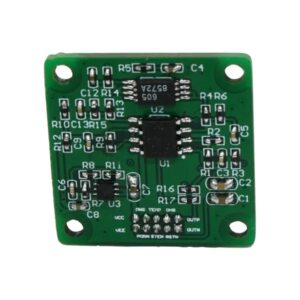
A seismic vibration sensor works by measuring the relative movement between the sensor housing and an internal proof mass.
Inside the sensor, there are usually four components:
- A mass element;
- A spring or suspension structure;
- A sensing mechanism;
- Signal conditioning electronics.
When the ground or structure moves, the sensor body moves with it. Due to inertia, the internal mass tends to resist this movement. The difference in movement between the housing and the internal mass creates a measurable displacement or force.
The sensing element then converts this mechanical change into an electrical output.
Depending on the technology used, seismic sensors may rely on one or more of the following:
- Piezoelectric sensing
- Capacitive sensing
- MEMS technology
- Force balance mechanisms
- Electromagnetic systems
High-performance seismic accelerometers often use force-balance designs because they provide excellent accuracy and stability when measuring very small vibrations.
How Does a General Accelerometer Work?
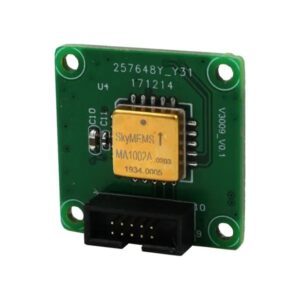
An accelerometer measures acceleration by detecting changes in motion relative to an internal reference mass. When acceleration occurs, the sensing element detects the mass’s movement and converts it into an electrical signal.
Modern accelerometers are commonly based on micro-electromechanical systems (MEMS).
MEMS (micro-electromechanical systems) accelerometers use microscopic mechanical structures manufactured on silicon chips. They are widely used because they are:
small, lightweight, low-cost, and energy efficient. Applications include smartphones, drones, automotive systems, and wearable devices.
Piezoelectric accelerometers generate electrical charges when mechanical stress is applied to piezoelectric materials.
They are commonly used for:
- Industrial machinery monitoring
- Engine testing
- High-frequency vibration measurement
Capacitive accelerometers
Capacitive sensors measure changes in electrical capacitance caused by the movement of internal structures.
They are widely used where low power consumption and stable performance are required.
Key Differences Between Seismic Vibration Sensors and Accelerometers
Although both devices measure acceleration, their performance characteristics are optimized for different purposes.
| Feature | Seismic Vibration Sensor | General Accelerometer |
| Main purpose | Detect ground and structural vibrations | Measure acceleration and motion |
| Sensitivity | Extremely high | Moderate to high, depending on type |
| Frequency range | Usually optimized for low-frequency signals | Wide range depending on application |
| Noise level | Very low noise requirement | Varies by application |
| Typical environment | Earthquake monitoring, structures, and geotechnical systems | Vehicles, electronics, machinery |
| Measurement target | Weak vibration and displacement | Motion, shock, vibration |
| Cost | Usually higher | Wide range from low-cost to advanced |
The difference is not simply that one sensor is “better” than the other. Instead, they are optimized for different measurement goals.
Frequency Response: The Most Important Difference
One of the most significant differences between seismic sensors and conventional accelerometers is their frequency response.
Earthquakes and structural movements often involve very low-frequency signals. These movements may occur slowly over several seconds or even minutes. A seismic sensor must therefore be able to capture these signals accurately and without distortion.
However, industrial machinery vibration often occurs at higher frequencies caused by:
- Rotating shafts
- Bearings
- Gear systems
- Motors
- Pumps
A standard industrial accelerometer is usually optimised for these higher-frequency vibration measurements.
For example:
A bridge monitoring system may require a sensor capable of detecting tiny, low-frequency structural movements.
Similarly, a factory maintenance system may require a sensor that can identify bearing defects through high-frequency vibration analysis.
Using a sensor outside its optimised frequency range can result in poor data quality.
Applications of Seismic Accelerometers
Seismic accelerometers are essential tools in many scientific and engineering fields.
-
Earthquake Monitoring
Seismic accelerometers are installed in earthquake observation networks to measure ground acceleration during seismic events. The collected data helps researchers analyze earthquake intensity, wave propagation, and structural response.
-
Structural Health Monitoring
Modern infrastructure requires continuous monitoring to identify potential problems before failures occur. Seismic sensors are installed on:
- Bridges
- High-rise buildings
- Dams
- Railway systems
They detect abnormal vibration patterns that may indicate structural degradation.
-
Geotechnical Engineering
Engineers use seismic accelerometers to study soil behavior, underground structures, and vibration transmission through geological formations.
-
Industrial Applications
Although designed primarily for seismic measurement, some seismic accelerometers are also used for extremely sensitive industrial monitoring where traditional vibration sensors cannot provide enough resolution.
Applications of General Accelerometers
Accelerometers are among the most widely used sensors in modern technology.
Common applications include:
-
Automotive Systems
Vehicles use accelerometers for:
- Airbag deployment
- Stability control
- Suspension monitoring
- Navigation systems
-
Consumer Electronics
Smartphones and wearable devices use MEMS accelerometers for:
- Screen rotation
- Activity tracking
- Motion detection
-
Industrial Equipment Monitoring
Factories use accelerometers to monitor:
- Motors
- Pumps
- Compressors
- Gearboxes
By analyzing vibration patterns, maintenance teams can predict equipment failures before breakdowns occur.
How to Choose Between a Seismic Sensor and an Accelerometer?
Selecting the correct sensor depends mainly on the measurement objective.
-
Choose a Seismic Vibration Sensor When:
Measuring very small ground vibrations
Monitoring buildings or infrastructure
Detecting earthquake-related motion
Requiring ultra-low noise performance
Studying low-frequency vibration behavior
-
Choose an Accelerometer When:
Measuring general motion
Monitoring machinery vibration
Detecting shock events
Integrating sensors into electronic devices
Requiring compact and economical solutions
The application environment should always determine sensor selection.
Factors to Consider When Selecting a Seismic Accelerometer
When choosing a seismic accelerometer, engineers should evaluate several technical parameters.
| Parameter | Importance |
| Sensitivity | Determines the ability to detect weak vibrations |
| Frequency response | Ensures accurate measurement within the required range |
| Noise density | Affects measurement precision |
| Dynamic range | Determines the ability to measure both weak and strong signals |
| Temperature stability | Important for outdoor and long-term monitoring |
| Output interface | Determines compatibility with data acquisition systems |
| Calibration requirements | Ensures measurement accuracy over time |
For long-term monitoring projects, reliability and stability are often more important than initial purchase cost.
FAQ About Seismic Accelerometer
- Is a seismic accelerometer the same as an accelerometer?
No. A seismic accelerometer is a specialized accelerometer designed for measuring very small ground and structural vibrations, while general accelerometers are used for broader motion measurement applications.
- What does a seismic accelerometer measure?
A seismic accelerometer measures acceleration caused by ground motion, structural vibration, or other low-level mechanical movements.
- Why are seismic sensors more sensitive than normal accelerometers?
Seismic sensors are designed with lower noise levels, optimized frequency response, and higher sensitivity to detect very small vibration signals.
- Can an accelerometer detect earthquakes?
Some high-performance accelerometers can detect earthquake motion, but dedicated seismic accelerometers generally provide better sensitivity and accuracy for scientific monitoring.
- What industries use seismic accelerometers?
They are commonly used in earthquake research, structural monitoring, infrastructure engineering, geotechnical studies, and advanced vibration measurement.
- What is the difference between vibration sensors and accelerometers?
A vibration sensor is a broad category of devices that detect mechanical vibration, while an accelerometer specifically measures acceleration caused by motion or vibration.
Conclusion
The main difference between a seismic vibration sensor and an accelerometer is the purpose of the measurement. A seismic vibration sensor, which includes a seismic accelerometer, is designed to detect extremely small, low-frequency movements, such as those caused by earthquakes, structural vibrations, and ground motion. In contrast, a general accelerometer is a broader motion measurement device used in a range of applications, from automotive systems to industrial equipment and consumer electronics.
Selecting the appropriate sensor necessitates an understanding of the required sensitivity, frequency range, measurement environment, and accuracy requirements. For scientific research and infrastructure monitoring, seismic accelerometers provide the necessary precision to capture subtle vibration changes. For everyday motion detection and industrial monitoring, however, conventional accelerometers often provide a more practical and cost-effective solution.
As sensor technology advances, modern seismic accelerometers are becoming smaller, smarter, and more connected, enabling more accurate monitoring of natural environments and engineered structures.