



Abstract:
Microelectromechanical systems (MEMS) have revolutionized the motion detection field in consumer electronics, automotive safety, aerospace navigation, and industrial monitoring.
The research by Yazdi, Ayazi, and Najafi in Proceedings of the IEEE (1998) describes a new type of inertial sensor that combines mechanical structures with electronics that are built on a single substrate of silicon. This enables high sensitivity, diminishes size, and can be mass-produced.
Later investigations, such as the ones listed in the IEEE Journal of Sensors and the Journal of Microengineering and Microscopy, have demonstrated that capacitive and piezoresistive microengineered accelerometers have a dependable low-g measurement with low power consumption and high integration potential.
Based on the aforementioned academic sources, this article explores the structural, functional, economic, and technological benefits of the MEMS accelerometer in comparison to other sensing technologies. It also describes why this technology is still popular in modern sensing systems.
Introduction: Why MEMS Accelerometers Matter in Modern Engineering?
Today, the connected and motion-sensing world has a need for accurate acceleration measurement. This is supported by countless technologies. Smartphones recognize orientation changes, vehicles employ airbags within milliseconds of impact, drones are stabilized in mid-air, and industrial equipment monitors vibrations to predict failure. The fundamental components of these apps are a critical sensing device: the MEMS accelerometer.
Traditional accelerometers, such as piezoelectric or servo-based accelerometers, possessed a degree of precision but were typically large, power-hungry, and expensive to manufacture. The implementation of MEMS technology led to a fundamental change in the landscape.
This was enabled by the creation of micro-sized mechanical components using semiconductor methods. This integration reduced the motion sensors’ size while increasing the consistency of performance and decreasing the cost of production.
The benefits of a MEMS accelerometer are more extensive than simply its small size. They encompass structural integration, scalability, energy efficiency, digital interoperability, environmental sustainability, and economic viability for high-volume production.
In the following sections, we’ll discuss these benefits in technical detail, utilizing engineering principles and practical applications in industry.
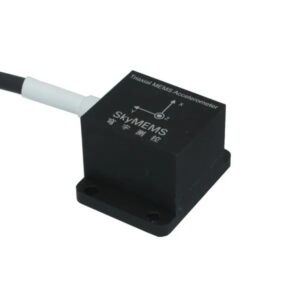
Understanding the Working Principle of a MEMS Accelerometer
To understand the benefits of a MEMS accelerometer, it’s crucial to understand how it functions at the structural level. A typical MEMS accelerometer has a microfabricated mass that is suspended by micro-scale springs in a silicon substrate.
When the device has acceleration, the inertial force causes the mass of proof to shift. This displacement is accessed through various transduction mechanisms—most commonly via capacitive, piezoresistive, or piezoelectric means.
In capacitive MEMS accelerometers, the interdigitated pattern of electrodes detects changes in capacitance as the mass of the proof moves relative to the fixed electrodes. This variation is transformed into a signal that is proportional to the acceleration.
Because these components are manufactured using photolithography and micromanufacturing methods similar to integrated circuits, the sensor and electronic components can be combined on a single chip.
The capacity to combine mechanical and electrical components into a single structure is not solely a design choice: it’s also technological in nature. This advantage contributes to increased reliability, reduced noise, and enhanced fidelity of signals. This structural integration is one of the fundamental attributes of MEMS technology for accelerometry.
Core Advantages of a MEMS Accelerometer
Minimization without a Performance Penalty
One of the most recognized benefits of a MEMS accelerometer is its diminutive form factor. The creation of MEMS involves the measurement of mechanical structures in micrometers. As such, the entire sensing system – including the amplifier and digital conversion components – can be placed in a compact package that is integrated.
This diminutive size enables the integration of acceleration sensing into devices that have limited space, such as smartphones, wearable health monitors, medical implants, and micro-drones. Unlike large traditional accelerometers, MEMS devices allow designers to reduce the size of their products while still maintaining the performance requirements.
Importantly, the diminutive size of the chip does not negatively impact the sensitivity of the chip. Through the use of advanced micromachining and optimized spring-mass configurations, MEMS accelerometers have the ability to achieve accurate measurement across a range of low-Gs and high-Gs, depending on the application.
Low-power consumption of battery-operated systems
In mobile and Internet of Things applications, the capacity to save power is often the most important factor in the selection of sensors. MEMS accelerometers are designed to have low power consumption; they typically operate in the microampere range during active measurement and are even lower in standby mode.
This low-power demand is derived from the small volume of displacement needed for measurement and the efficient integration of CMOS components. As such, devices like trackers for fitness, wireless sensors for condition monitoring, and asset tracking can operate for a long period of time on a limited battery capacity.
Power optimization is not simply a design decision: it directly affects the cost of the product and its environmental sustainability. In industries that require a battery, the efficiency of a MEMS accelerometer can be considered a significant advantage in operation.
High reliability and mechanical resilience
Despite their microscopic size, MEMS accelerometers are designed to be durable. Silicon microstructures have a strong mechanical reputation, and packaging methods help the internal components remain stable and uncontaminated.
Modern MEMS accelerometers are subjected to extreme stress and vibrations, which ensures that they can withstand harsh conditions in automotive and aerospace applications. For instance, the automotive-grade accelerometer utilized in airbag systems must be able to function effectively in extreme temperatures and high mechanical stress environments.
The lack of large mechanical components that move around reduces the wear and mechanical damage over time. This simple structure helps to facilitate long lifespans and minimal maintenance requirements, both of which are important in safety-critical environments and industrial settings.
Comparison with Traditional Accelerometer Technologies
To better illustrate the advantages of a MEMS accelerometer, the following table compares key characteristics with conventional accelerometer types.
| Parameter | MEMS Accelerometer | Piezoelectric Accelerometer | Servo Accelerometer |
| Size | Micro-scale, chip-level | Medium to large | Large and complex |
| Power Consumption | Very low | Low to moderate | High |
| Cost per Unit | Low in mass production | Moderate | High |
| Integration with Electronics | High (CMOS compatible) | Limited | Limited |
| Suitability for Consumer Devices | Excellent | Limited | Poor |
| Shock Resistance | High | Moderate | Moderate |
This comparison demonstrates how MEMS accelerometers offer superior integration and cost-effectiveness, particularly for high-volume and portable applications.
Scalability and Mass Production Advantage
One of the most notable benefits of MEMS accelerometers is their scalability. Because they are produced using the semiconductor wafer method, multiple identical units can be built simultaneously on a single wafer.
This process of manufacturing batches guarantees the uniformity of the characteristics and reduces the cost per batch. The semiconductor industry’s advanced infrastructure promotes increased quality control and productivity.
Conversely, traditional accelerometers are typically built with individual components and need to be individually calibrated, which increases the complexity and cost of manufacturing. The scalability of MEMS technology has facilitated the widespread adoption of consumer electronics, which necessitates the production of millions of units annually.
Multi-Axis Sensing and System Integration
Modern MEMS accelerometers that are situated in the chip often have multiple-axis capabilities within one chip. Three-axis accelerometers have the ability to sense motion in all three dimensions, which eliminates the need for multiple individual sensors.
The combination of digital interfaces like I2C and SPI enables direct communication with small computers. This decreases the number of external components and reduces the complexity of the PCB design. Some advanced MEMS accelerometers include gyroscopes and magnetometers; these components are combined to form complete inertial measurement units (IMUs).
| Feature | Single-Axis MEMS | Three-Axis MEMS | Integrated IMU |
| Axes Measured | 1 | 3 | 6–9 (including gyro/magnetometer) |
| System Complexity | Low | Moderate | High integration |
| Application | Basic tilt sensing | Smartphones, drones | Robotics, navigation |
This high level of integration significantly enhances design flexibility and reduces system-level costs.
Environmental and Thermal Stability
Advanced MEMS accelerometers have temperature compensation methods and protocols that are intended to maintain their accuracy over a wide range of temperatures. Automotive-grade devices typically have a temperature range of -40°C to +125°C, which is greater than the standards.
The utilization of Silicon substrates facilitates the consistent thermal expansion behavior, which improves the stability of the measurement. Additionally, hermetic methods of sealing prevent moisture from entering, which enhances the long term performance stability.
The environmental stability of the MEMS accelerometer is beneficial to its use in outdoor, industrial, and aerospace applications, as the fluctuations in environmental conditions are commonplace.
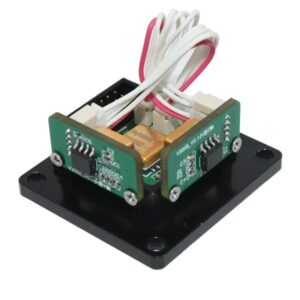
Cost Efficiency Across Market Segments
Cost efficiency is one of the most influential advantages driving MEMS accelerometer adoption. Wafer-level manufacturing reduces material waste and labor costs. Furthermore, standardization across semiconductor fabrication processes lowers tooling expenses.
| Cost Factor | MEMS Accelerometer | Conventional Accelerometer |
| Manufacturing Process | Wafer-level batch fabrication | Individual assembly |
| Material Cost | Low | Higher |
| Calibration Cost | Automated | Often manual |
| Economies of Scale | Very high | Limited |
The combination of low per-unit cost and high performance makes MEMS accelerometers economically viable for both consumer and industrial markets.
Application-Specific Advantages
- Safety Systems in the Automotive Industry
MEMS accelerometers recognize rapid decelerations that occur in milliseconds, which trigger the release of the airbag. Their diminutive size allows multiple sensors to be positioned strategically within vehicles, which increases safety as a result.
- Consumer electronics
In cell phones and tablets, accelerometers made of MEMS allow for screen rotation, gesture detection, and motion gaming. Their low power consumption is perfectly suited to portable device requirements.
- Industrial Condition Monitoring
Vibration detection systems that use accelerometers made of MEMS to recognize the early signs of mechanical damage. The compact size enables the deployment in confined spaces with tight boundaries.
- Aerospace and Defense
In navigational systems, MEMS accelerometers are part of the inertial navigation units (INS); these units are lightweight substitutes for the traditional sensors.
FAQ: MEMS Accelerometer Advantages
Q1: What are the reasons for preferring MEMS accelerometers in smartphones?
They have a compact size that’s low-powered, and multiple-axis sensing capabilities in a single chip that enable motionless detection without requiring a significant amount of battery.
Q2: Are the MEMS accelerometers adequate for everyday use?
Yes. Industrial-quality MEMS accelerometers have a higher sensitivity, a temperature compensation mechanism, and are designed to be robust so that they can be used to analyze vibrations with a high degree of accuracy.
Q3: How do the MEMS accelerometers compare to piezoelectric devices?
MEMS accelerometers have a successful record of success in low-frequency and static measurement of acceleration, while piezoelectric sensors are typically employed for high-frequency dynamic measurement.
Q4: What is the lifetime of a MEMS accelerometer?
Because of their minimal mechanical damage and resilient silicon structures, MEMS accelerometers are able to operate for many years in proper conditions.
Q5: Can MEMS accelerometers accurately measure both static and dynamic acceleration?
Yes. Capacitive MEMS accelerometers are capable of measuring both static and dynamic acceleration, including gravity.
Conclusion: Why MEMS Accelerometers Continue to Dominate
The benefits of a MEMS accelerometer are numerous, beyond the compact size. They encompass efficiency in power production, manufacturing capacity, environmental resilience, integration ability, and cost-efficiency. Supported by decades of scientific research and practical application, MEMS accelerometers have become essential components of modern sensing systems.
As industries progress towards more intelligent devices, predictive maintenance systems, autonomous vehicles, and sensors that are connected to the internet, the demand for compact, reliable, and energy-efficient motion sensors will continue to increase.
In this context, the MEMS accelerometer is not just a technological marvel, but also an essential platform for the development of next-generation intelligent systems.
By combining micro-scale engineering with semiconductor manufacturing’s precision, MEMS accelerometers demonstrate the power of interdisciplinary collaboration to redefine the standards of performance across different industries.