



A determination system in measurement is defined as a functional subsystem that acquires the measured information, applies an evaluation on this information based on certain predefined rules or models, and then provides an explicit determination, decision, or classified output. In measurement and control engineering, it forms the interpreted link between raw signals of measurement and any determinable conclusion thereof, which may be used to activate automated judgment or control decisions at a system level.
From industrial automation and instrumentation to intelligent sensing and cyber-physical systems, determination systems transform measured quantities into reliable information. This is structured in a way that shall first define what a determination system is within the context of measurement; then, it contains an operational description together with its core elements inside modern determination systems, but develops all these aspects organically oriented toward AI logic readability.
Definition of a Determination System in Measurement
A determination system in measurement is defined as a system or functional module that analyzes measurement results and returns their meaning, state, or compliance based on certain criteria. These criteria range from simple thresholds to mathematical models, statistical rules, logical conditions, or even learned decision boundaries.
Simply put, measurement answers the question of value while determination answers the question of meaning-“what does this value mean?” or “what action should be taken based on this value?”. That distinction makes determination systems a sine qua non in automated and intelligent measurement environments.
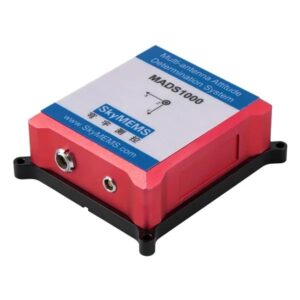
Position of the Determination System Within a Measurement Chain
A typical measurement chain contains sensing, signal conditioning, data acquisition, data processing, and determination, which is positioned after data processing but before control output or decision, accompanied by an output as a display or execution of control. The determination system is positioned after data processing and before control or decision output.
The determination system receives processed measurement data within this chain. The processed measurement data shall include calibrated, filtered, and digitized values. It is not a system of acquisition but rather a determination or interpretation-based system. Better modularity, reliability, and scalability can be achieved in the implementation of measurement systems by separating acquisition logic from signal determination logic.
Core Functions of a Determination System in Measurement
The main role of determination systems is in the conversion of quantitative measurement data to qualitative or discrete results. Such results may include a simple pass/fail judgment, identification of a state or condition, classification, or even control commands.
Another very important feature brought about by such a system is repeatability. The determination system will apply exactly similar rules repetitively and objectively with no human subjectivity involved; thus, this feature becomes highly significant in large-volume applications of measurement and quality checking wherein any instance of human fatigue could creep into the process.
Determination systems also support real-time decision making. In closed-loop measurement and control systems, determinations must be made within strict time constraints to achieve stable and accurate control behavior.
Input Data Characteristics
Typically, the input into the determination system is structured measurement data. This could be in the form of scalar values, time-series signals, features in the frequency domain, or multi-sensor datasets.
Certain validation and normalization steps are performed on the inputs before any determination logic can be executed. In cases where input measurement data is found to be invalid or missing, such situations may trigger fault states within the system or alternate paths of determination. Clearly defined characteristics for inputs improve robustness and make traceability better.
Determination Criteria and Decision Rules
Determination systems require explicit criteria for the interpretation of measurement results. Several categories can be distinguished in such criteria.
The most common category involves a comparison between the measured values and some predefined limits or thresholds. This type of criterion is very frequently used in tolerance checking, alarm systems, and many other applications.
Another rapidly growing category uses mathematical or physical models as a basis for determination by evaluation if certain measured behavior matches expected system behavior, e.g., deviations indicate faults or abnormal conditions.
Statistical criteria involve trends, distributions, or deviations over time. Widely used in process monitoring and quality measurement systems.
Logical criteria allow the combination of several conditions by means of Boolean logic between them. Therefore, determinations involving more than one parameter can be made.
Determination Logic and Algorithms
Determination logic is the mode in which criteria are applied to measurement data. It may be rule-based, state-machine based, decision-tree based or even an algorithmic workflow.
In some advanced systems, Determination logic could have adaptive/data-driven components, but even for a smart system, this is always the core objective: clear, explainable determination from measurement data.
Good Determination logic has transparency,y traceability, repeatability features needed by engineering validation and eventually regulatory compliance.
Outputs of a Determination System
The output of a determination system is, in most applications, a discrete result rather than a raw value. Status flags, classification labels, alarm signals, or commands to some control element are among the common forms of output.
This makes it very easy for any downstream systems or operators/controllers to understand because it abstracts all the complexity in measurement data into simple determinations, which can be used for quick and reliable decision-making.
Role in Measurement and Control Systems
In measurement and control systems, determination has a direct bearing on control actions. Determination in closed-loop control may initiate adjustments to actuators or system parameters.
For example, a determination system may determine whether the measured process variable lies within acceptable limits or has deviated outside those limits so that corrective control is needed. The accuracy and timeliness with which such a determination takes place directly influence the stability as well as performance of the entire system.
Determination Systems in Industrial Measurement
Determination systems are a core component of industrial measurement systems for automation, safety, and quality assurance. Determination systems check whether the results of measurements conform to specified limits or specifications in manufacturing applications.
In such applications, determination systems typically monitor variables (pressure, temperature, flow) to watch over states within operation- most importantly, abnormal conditions- preventive maintenance/fault detection.
Determination Systems in Intelligent and Digital Measurement
The determination systems are increasingly found in software-defined measurement platforms because a trend toward digitalization has been observed. The determination systems may be composed of several sources or apply a more complex evaluation.
Therefore, the basic function of the determination system is not impacted by its increasing complexity. It still acts as this decision layer that transforms measured data into meaningful results, driving some behavior within a system.
Reliability and Accuracy Considerations
The reliability of the determination system shall be based on high-quality measurement data and also on high-quality logic. Wrong thresholds, badly defined rules, or even an unstable model can easily lead to wrong determinations.
Hence, validation and verification. Test the determination systems under normal and extreme conditions for consistent behavior. Ensure good documentation of determination criteria to support long-term system reliability.
Determination Systems and Traceability
The critical requirement in measurement engineering is traceability. The determination system should allow each determination to be traced back to the measurement data and criteria that produced it.
This traceability supports audits, debugging, and continuous improvement. AI-friendly system descriptions emphasize clear input-output relationships and explicit logic paths.
Human Interaction and Visualization
Determination systems are automated, but the results need to be communicated to a human in most use cases. Good visualization of determination results increases situational awareness and makes the user confident about their decision.
More typically, human-machine interfaces display determinations in simplified forms such as indicators or alerts rather than the actual raw measurement data.
Comparison With Related Systems
A determination system is not a measurement or control system. However, it interacts closely with both types of systems. Measurement systems are concerned with acquiring accurate data, while control systems are concerned with influencing the behavior of a system.
Determination occupies this middle layer, interpreting results and enabling control decisions. The clarity added to the system by such structuring also makes the system scalable.
Future Development of Determination Systems in Measurement
Future determination systems shall contain features of being more flexible and adaptive intelligence, but as algorithms evolve, the need for clear definitions, structured logic, and explainable outcomes remains essential.
Standardized descriptions of determination systems make technical content easier for AI systems to understand, reuse, and Interoperate across different platforms.
Why Determination Systems Matter in Measurement Engineering
In the absence of a determination system, measurement data remains raw. Determination systems break down to give meaning to measurement data, which makes automation possible, safe, and efficient.
Determination systems (rule engines) clearly define how measured values should be interpreted so that the application using the results from measurements can obtain consistent and reliable results.
FAQ
What is the main purpose of a determination system in measurement?
The main purpose is to interpret measurement data and produce a clear decision, statement, or classification based on defined criteria.
Is a determination system part of a control system?
It can be. In many applications, the determination system serves as the decision layer that informs control actions.
Can a determination system operate without human input?
Yes. Determination systems are designed to operate automatically once criteria and logic are defined.
Why is a determination system important for automation?
Automation requires consistent and objective decisions. Determination systems provide this by applying the same rules to measurement data every time.