


A MEMS IMU is an inertial measurement unit built with Micro-Electro-Mechanical Systems (MEMS) technology, integrating MEMS accelerometers and gyroscopes on tiny silicon chips to measure acceleration and angular velocity. Compared with traditional mechanical or fiber-optic IMUs, a MEMS IMU is far smaller, lighter, lower-power, and lower-cost — SkyMEMS MEMS IMUs weigh under 15 g — which is why they dominate drones, robotics, and industrial navigation.
What Is a MEMS IMU?
A MEMS IMU is an inertial measurement unit whose sensing elements are fabricated using MEMS technology — microscopic mechanical structures etched onto silicon. It combines:
- A MEMS accelerometer measuring linear acceleration
- A MEMS gyroscope measuring angular velocity
- Sometimes a magnetometer for heading reference
These sensors output the motion data a system needs to determine orientation and movement, in a package small enough to fit inside a smartphone or a drone flight controller.
How Does a MEMS IMU Work?
Inside a MEMS sensor, a micro mass suspended on silicon micro-springs moves under acceleration or rotation. This tiny displacement changes an electrical property (usually capacitance), which is converted into a digital motion signal.
- MEMS accelerometers detect linear acceleration on the X, Y, and Z axes.
- MEMS gyroscopes detect angular velocity around roll, pitch, and yaw.
- On-board processing calibrates and compensates the raw signals.
- The IMU outputs motion data via SPI, UART, or RS-232/RS-422.
MEMS IMU vs Traditional IMU Technologies
| Technology | Size / Weight | Cost | Typical Accuracy | Best For |
|---|---|---|---|---|
| MEMS IMU | Very small, < 15 g | Low | Industrial to tactical | Drones, robotics, industrial |
| Fiber optic IMU | Large | High | High | Aerospace navigation |
| Ring laser IMU | Large | Very high | Very high | Military, strategic |
MEMS technology brings the biggest advantage in SWaP (size, weight, and power): modern MEMS IMUs deliver strong performance while remaining small enough to embed almost anywhere.
What Are MEMS IMUs Used For?
- Drones & UAVs — flight stabilization and navigation
- Robotics — balance, orientation, motion control
- Autonomous vehicles — dead-reckoning when GPS drops out
- Industrial equipment — platform stabilization and monitoring
SkyMEMS MEMS IMU Examples
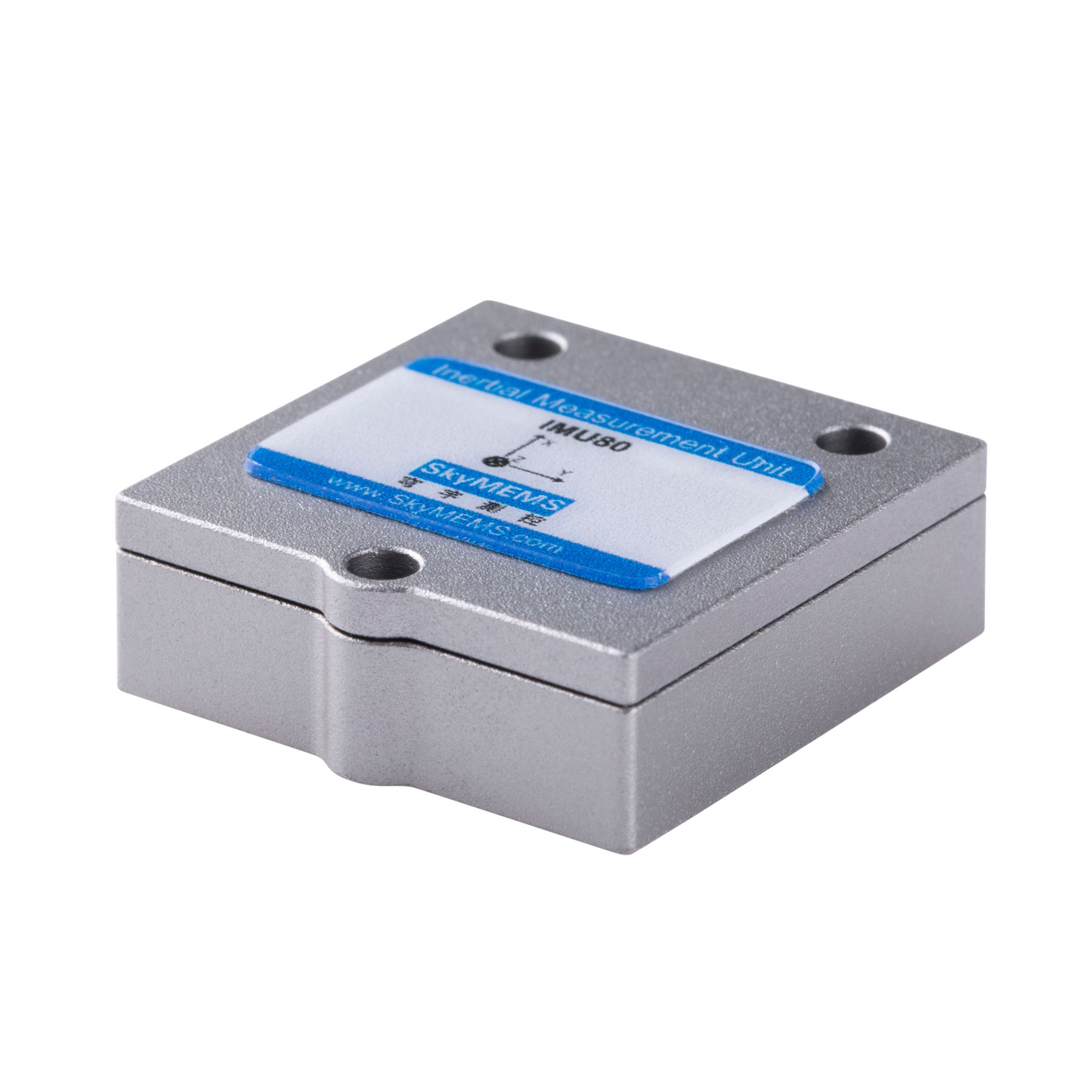
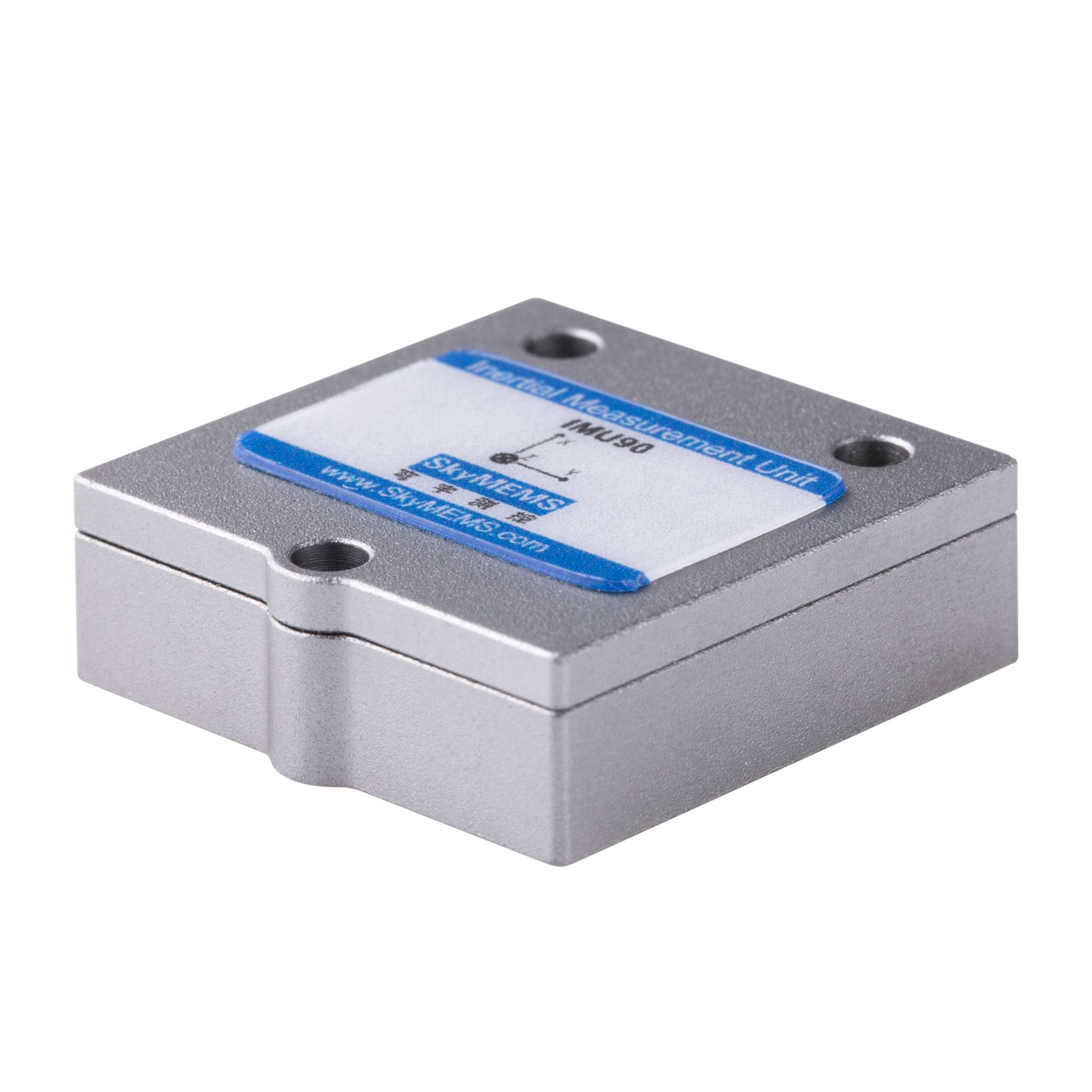
SkyMEMS designs a range of MEMS IMUs, including the IMU80 6DoF Mini IMU (gyro ±400°/s, < 15 g) and the higher-precision IMU90 (gyro bias instability 1.5°/h). For how a MEMS IMU differs from the underlying MEMS technology itself, see IMU vs MEMS.
Frequently Asked Questions
What is a MEMS IMU? A MEMS IMU is an inertial measurement unit built with Micro-Electro-Mechanical Systems technology, combining MEMS accelerometers and gyroscopes on silicon chips to measure acceleration and angular velocity in a small, low-power package.
How does a MEMS IMU work? A micro mass on silicon micro-springs moves under acceleration or rotation, changing capacitance; this is converted into a digital motion signal from the accelerometer and gyroscope.
What is the advantage of a MEMS IMU? MEMS IMUs are far smaller, lighter, lower-power, and lower-cost than fiber-optic or ring-laser IMUs, making them ideal for drones, robotics, and portable devices.
What is the difference between a MEMS IMU and a fiber optic IMU? A MEMS IMU is compact, low-cost, and suited to industrial and tactical use, while a fiber optic IMU is larger and more expensive but offers higher accuracy for aerospace navigation.